Image 1 of 26
Image 2 of 26
Image 3 of 26
Image 4 of 26
Image 5 of 26
Image 6 of 26
Image 7 of 26
Image 8 of 26
Image 9 of 26
Image 10 of 26
Image 11 of 26
Image 12 of 26
Image 13 of 26
Image 14 of 26
Image 15 of 26
Image 16 of 26
Image 17 of 26
Image 18 of 26
Image 19 of 26
Image 20 of 26
Image 21 of 26
Image 22 of 26
Image 23 of 26
Image 24 of 26
Image 25 of 26
Image 26 of 26
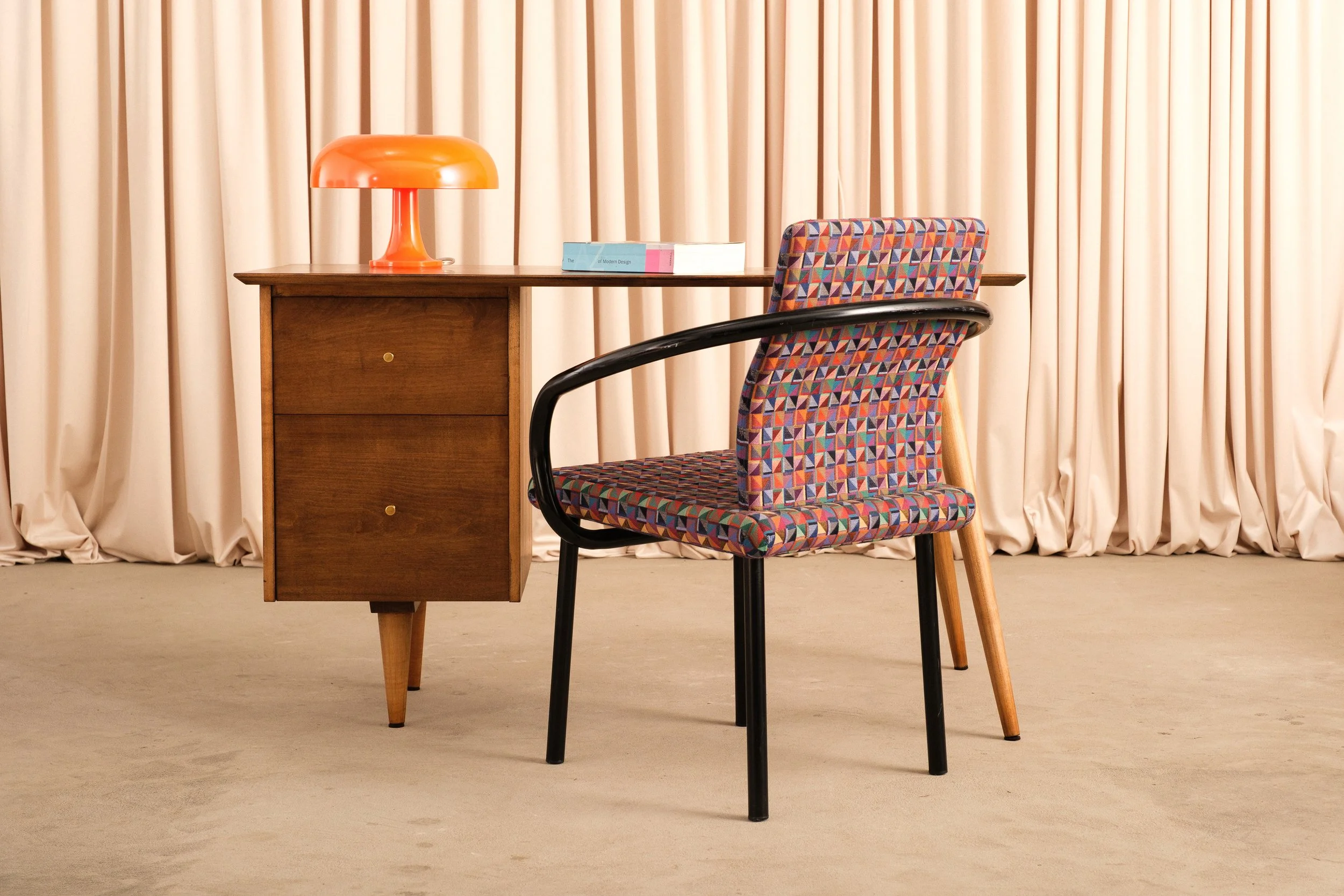
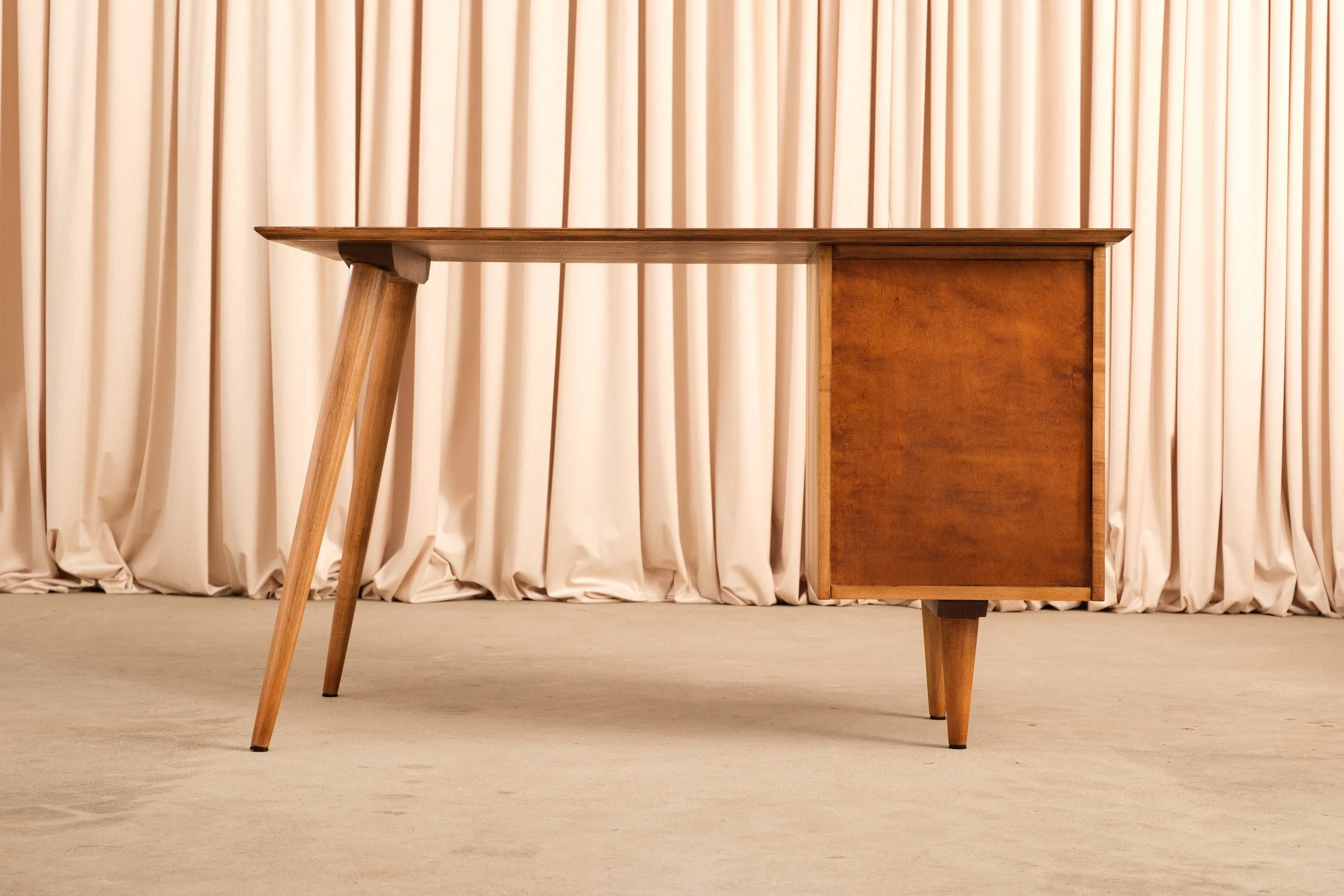
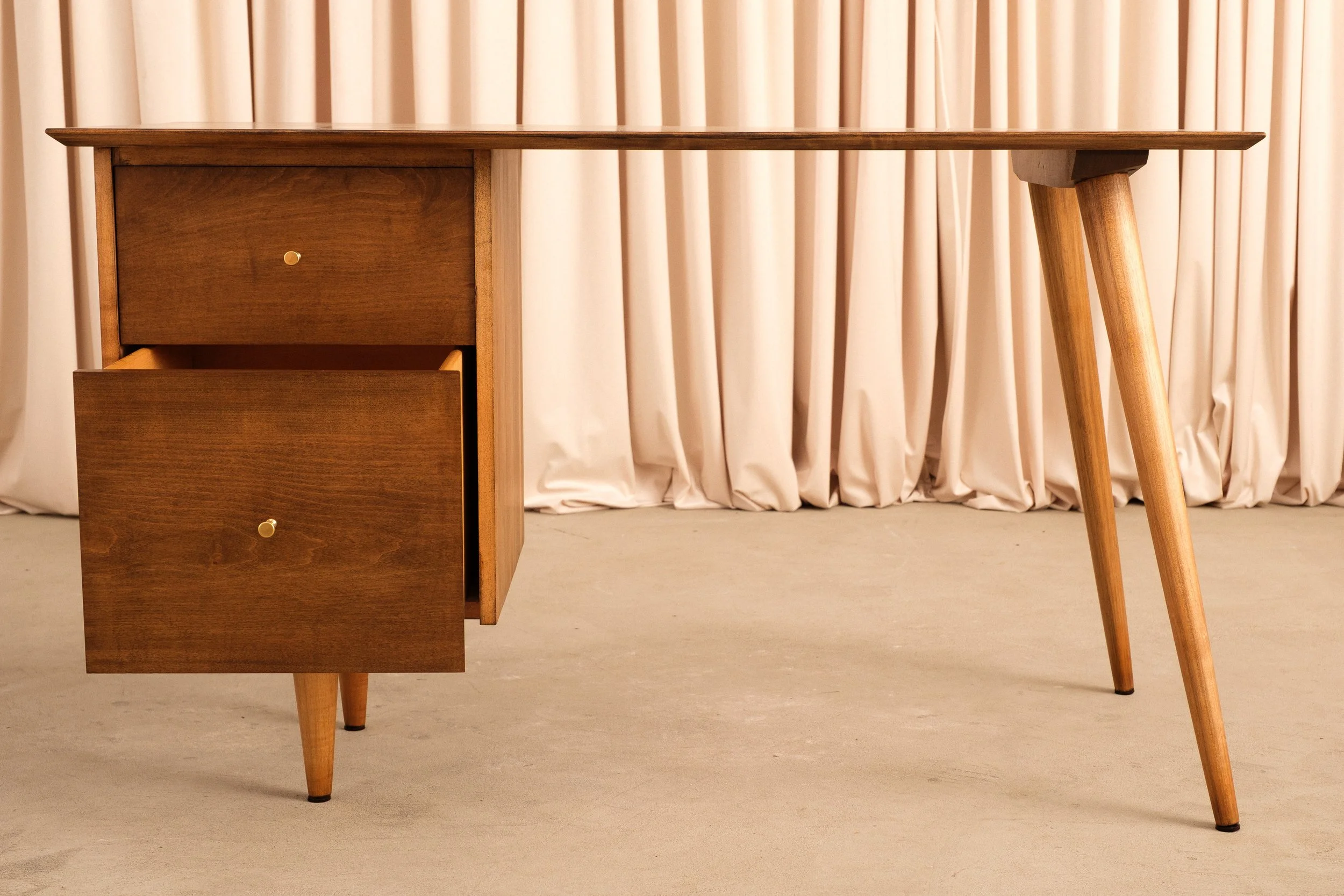
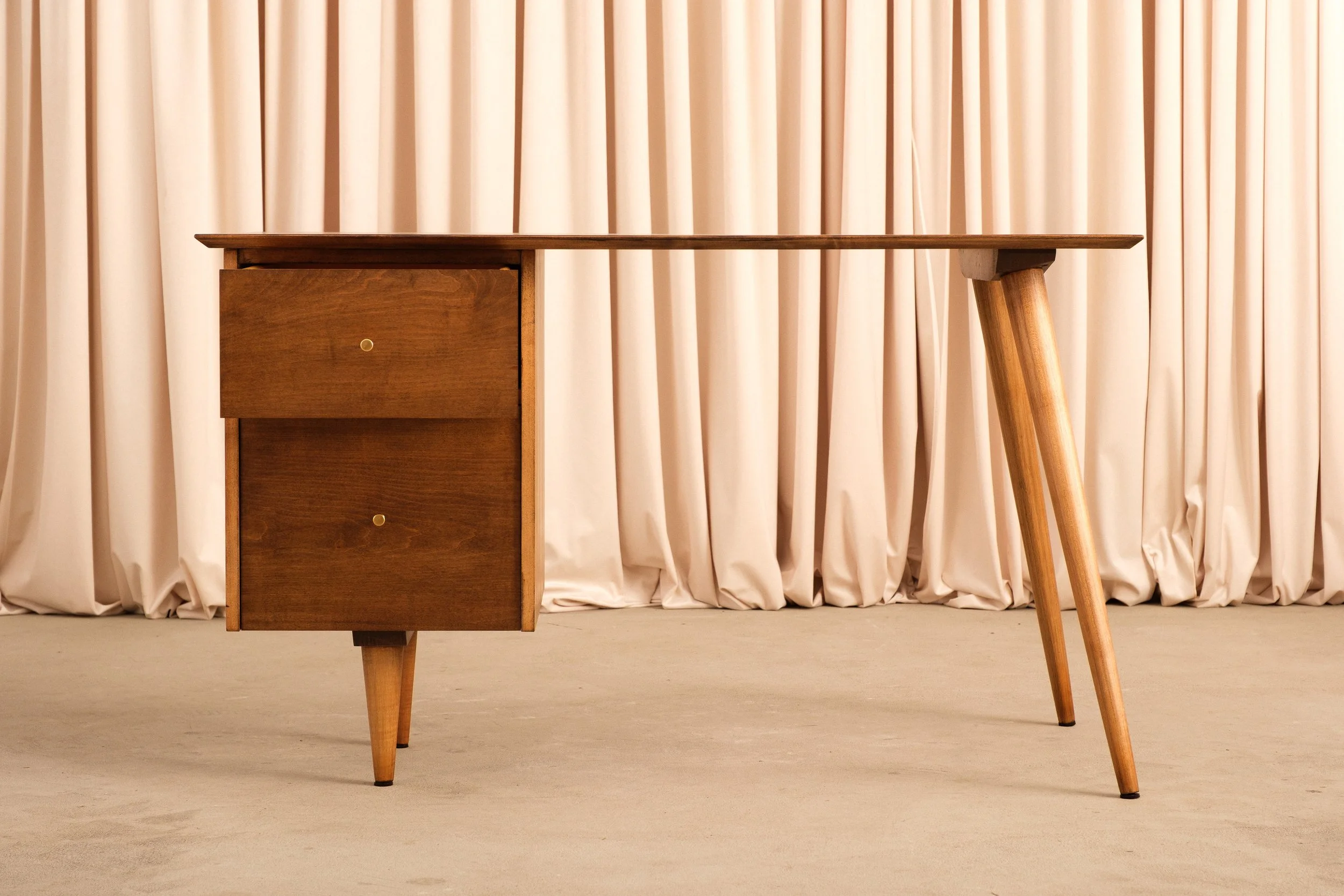
Paul McCobb Planner Group Desk, 1960s
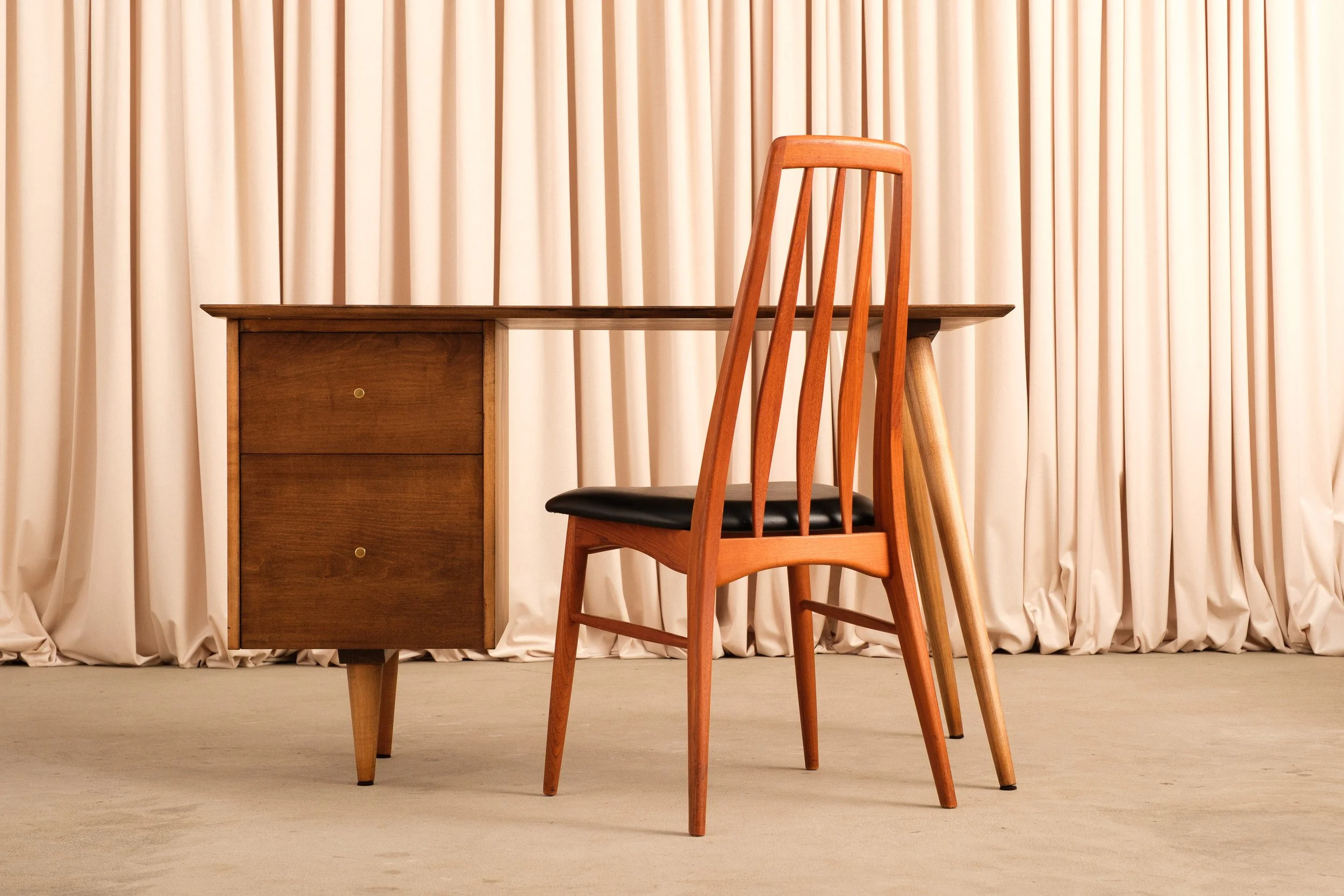
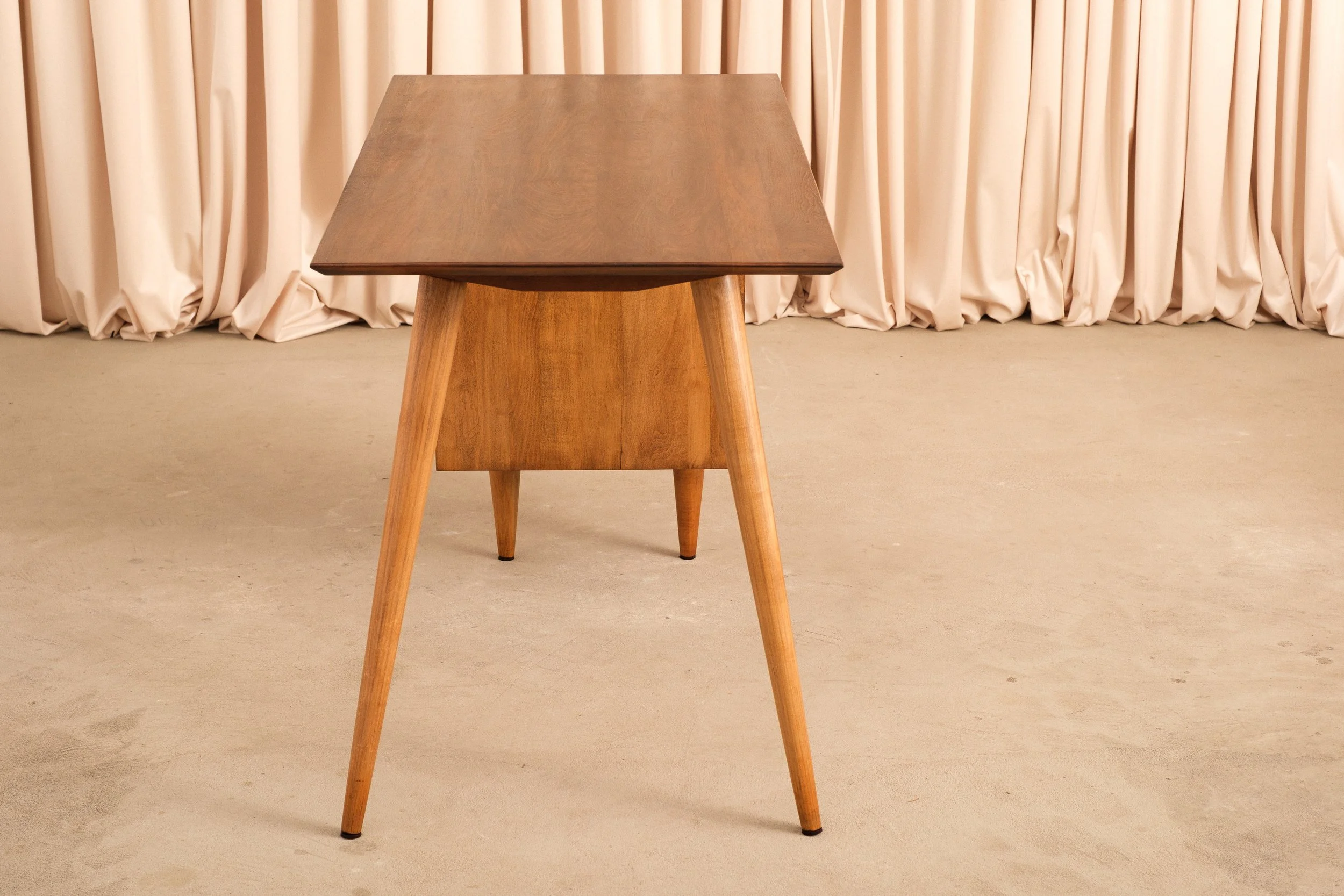
A beautifully restored example of one of Paul McCobb's most enduring mid-century designs.
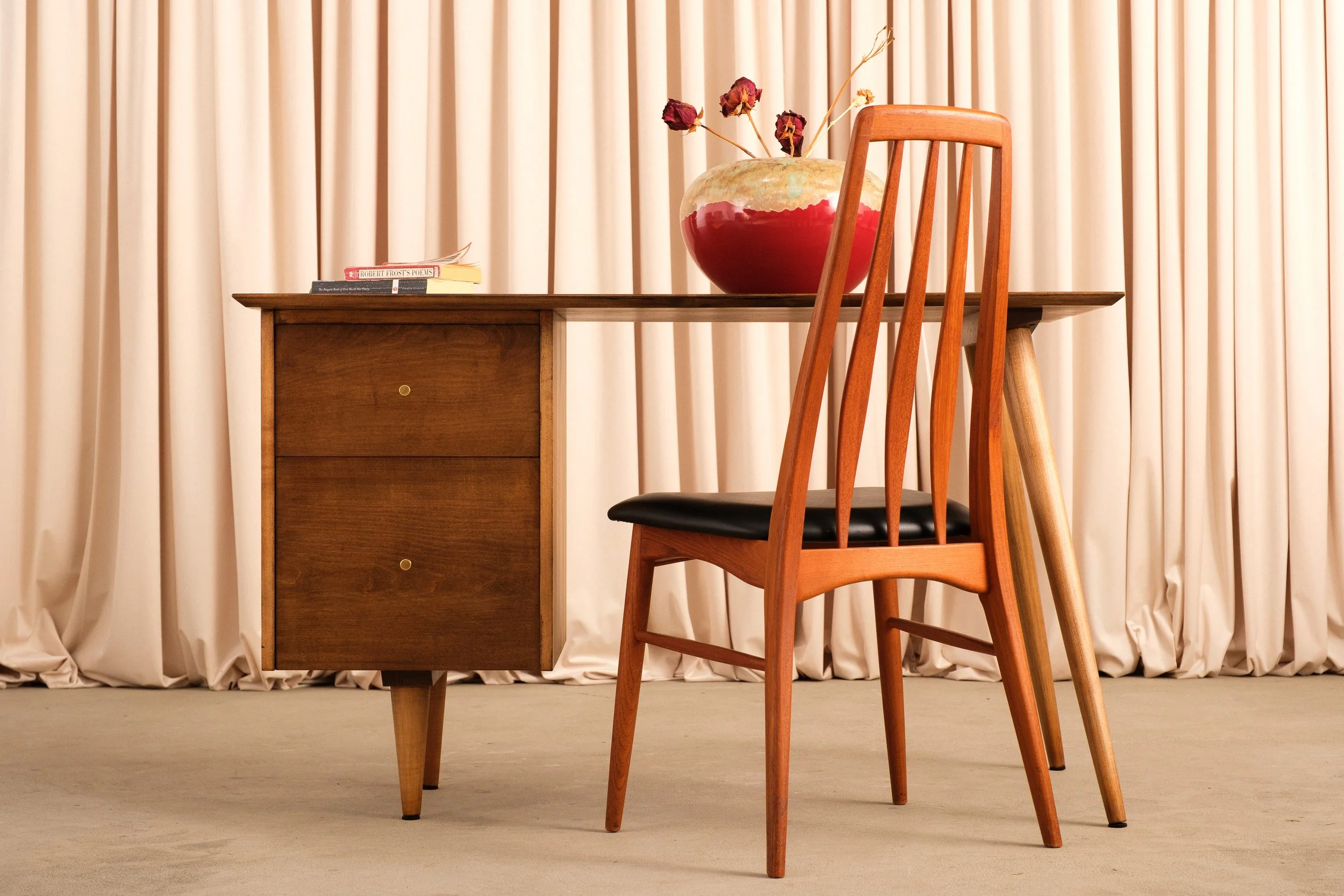
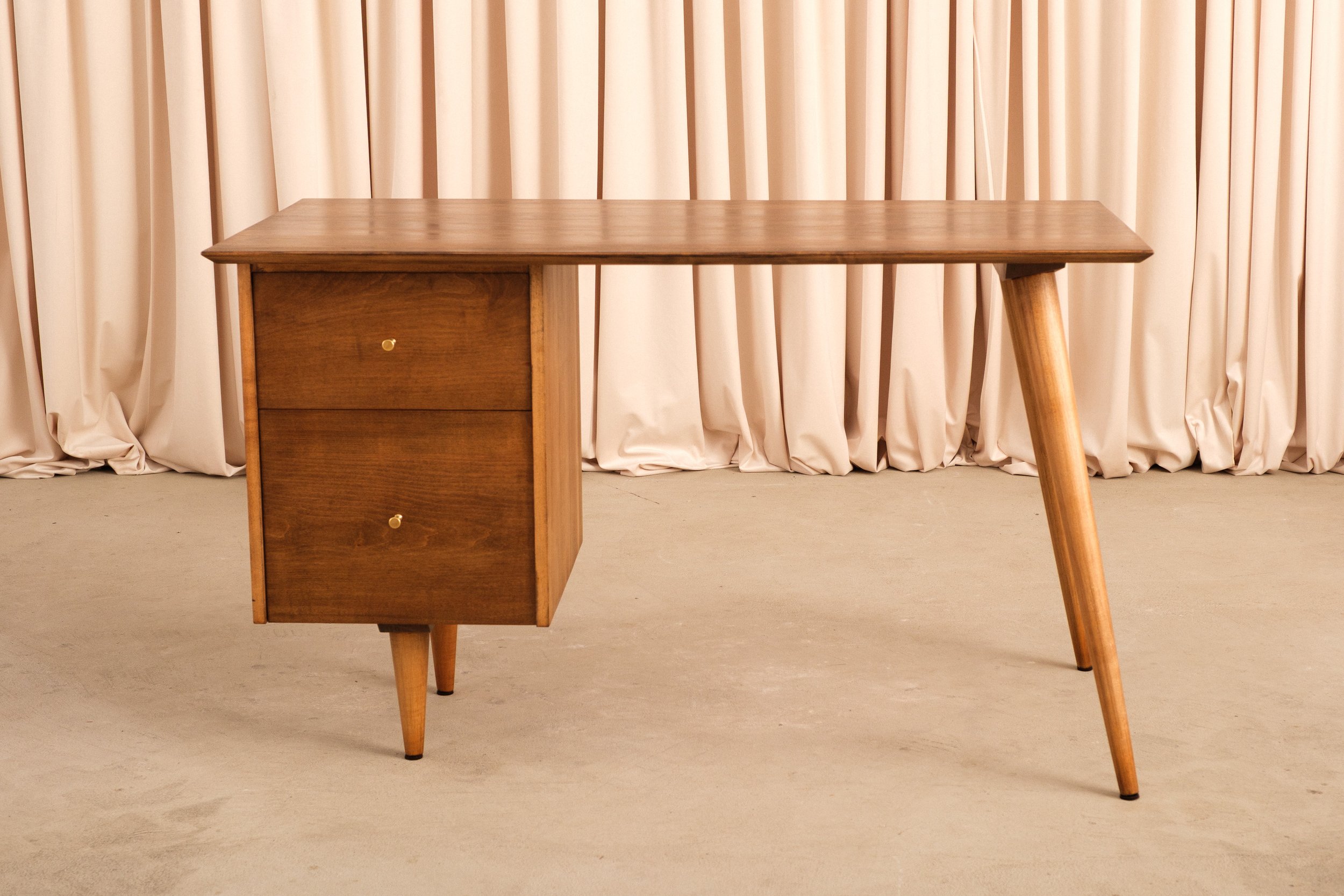
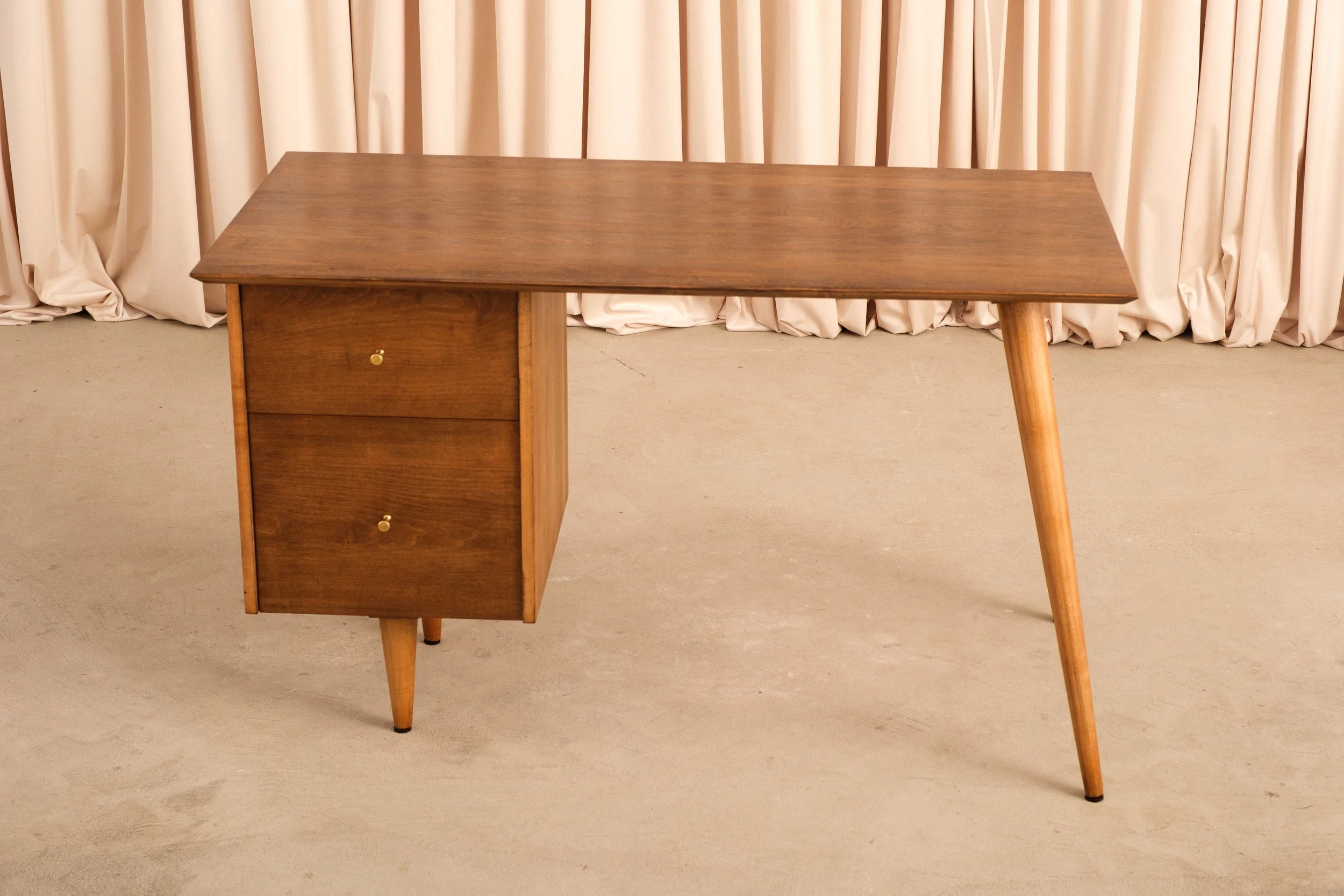
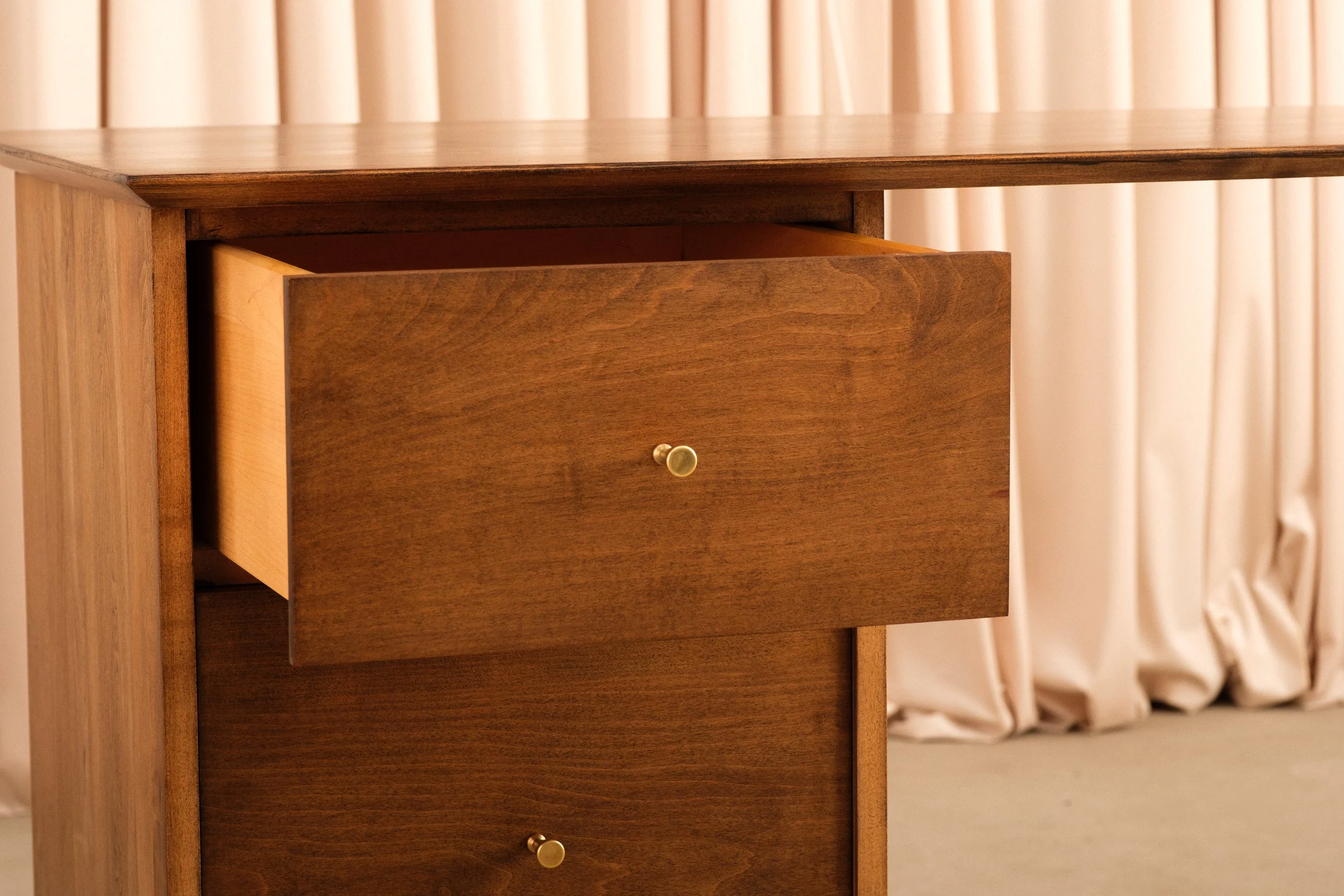
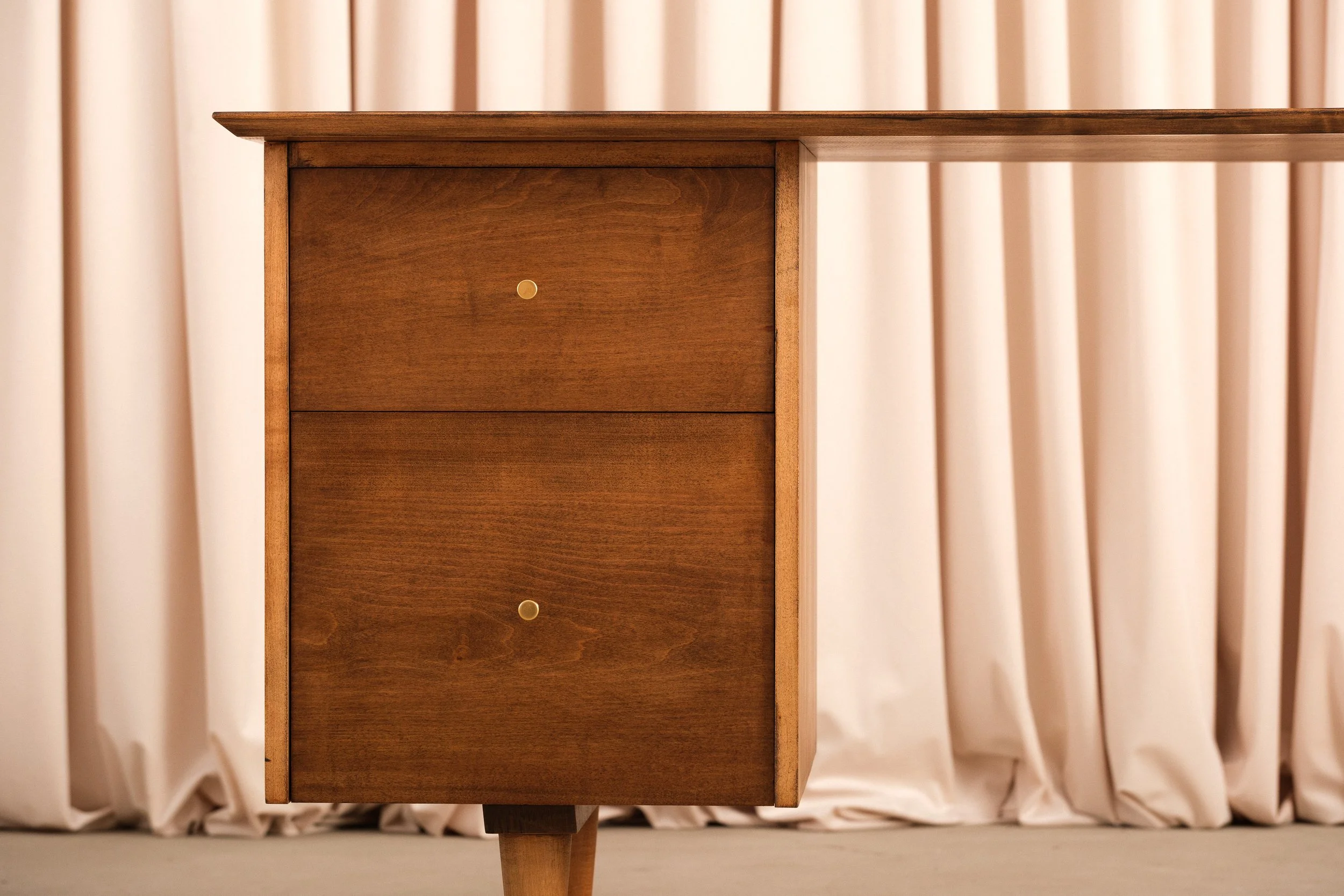
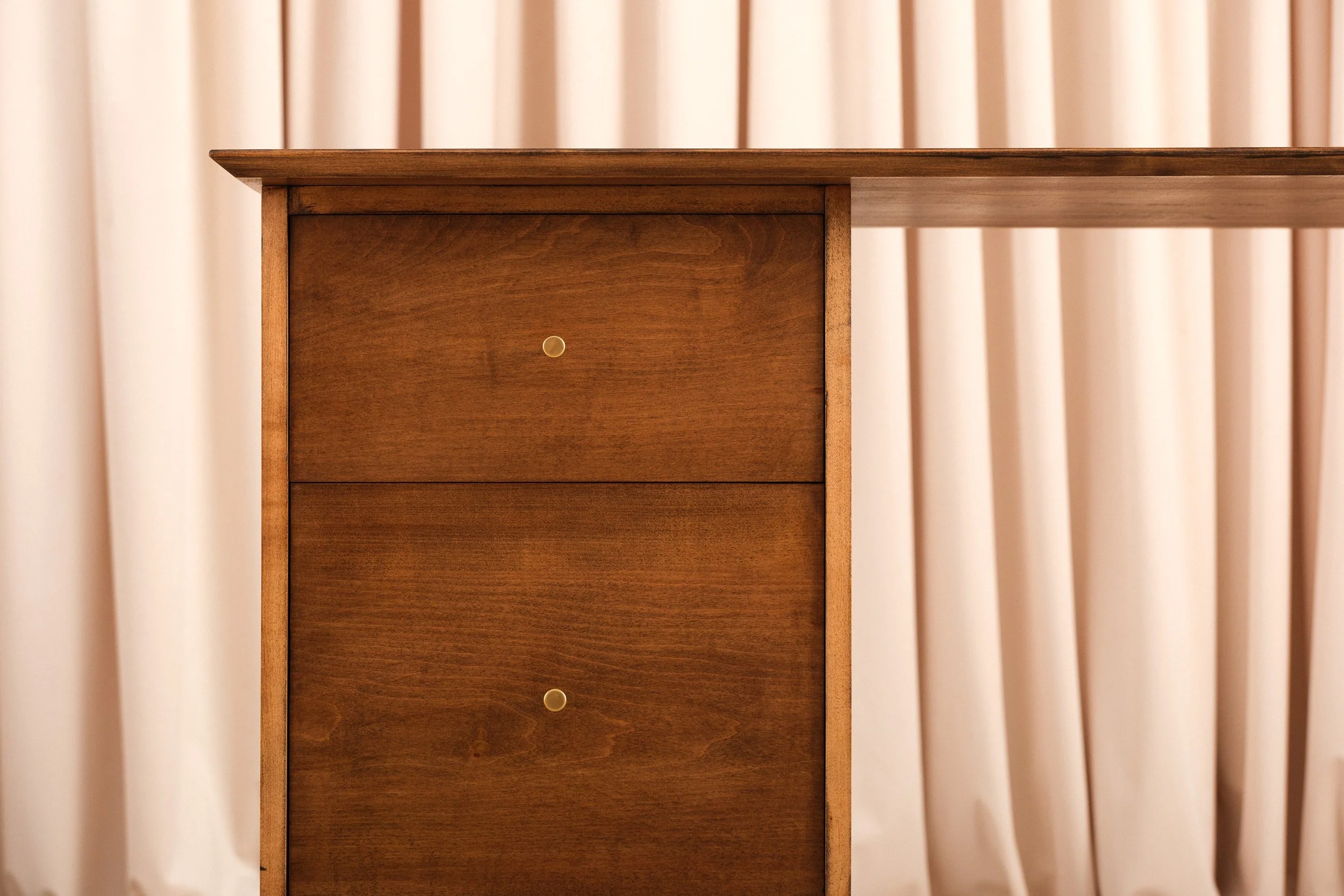
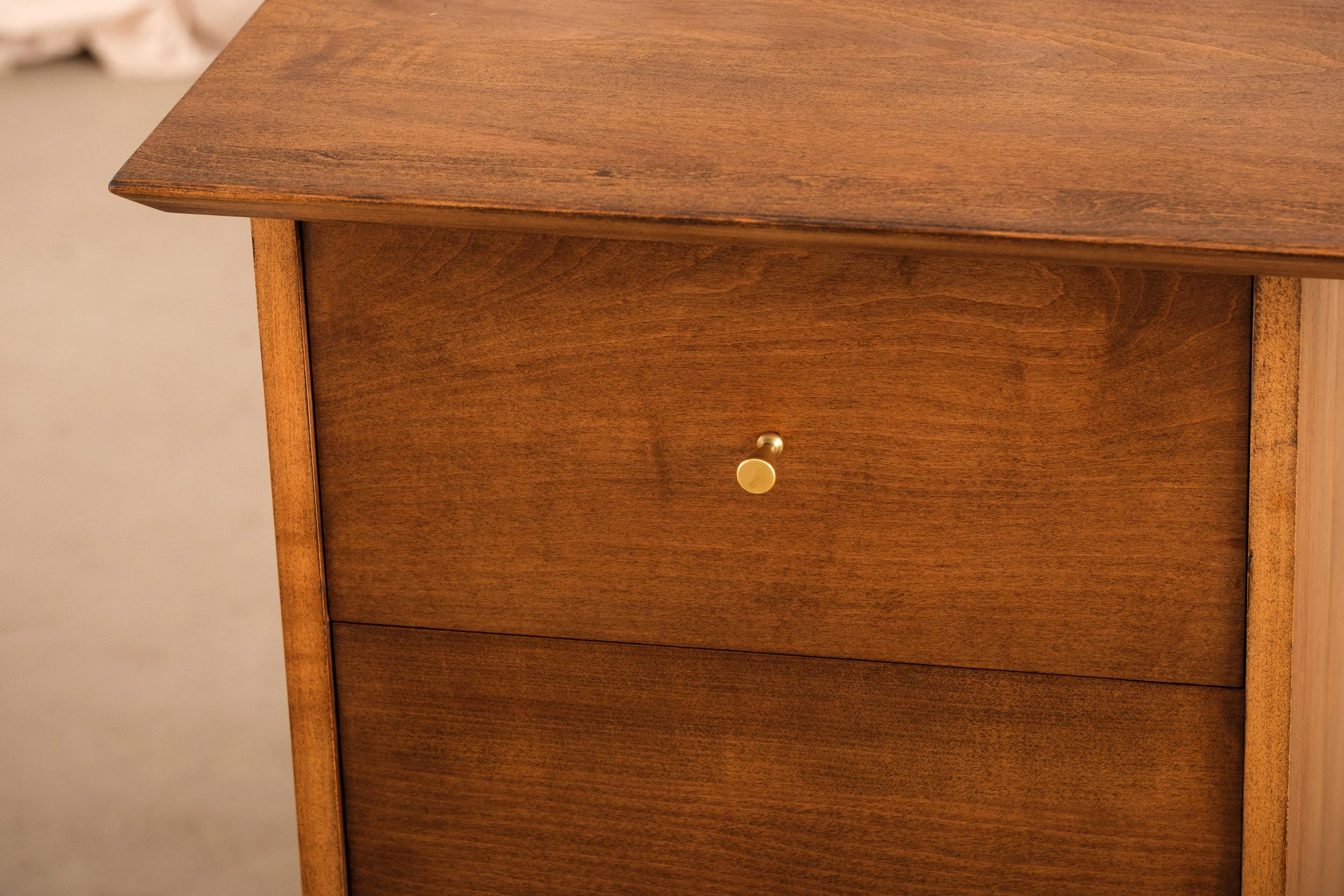
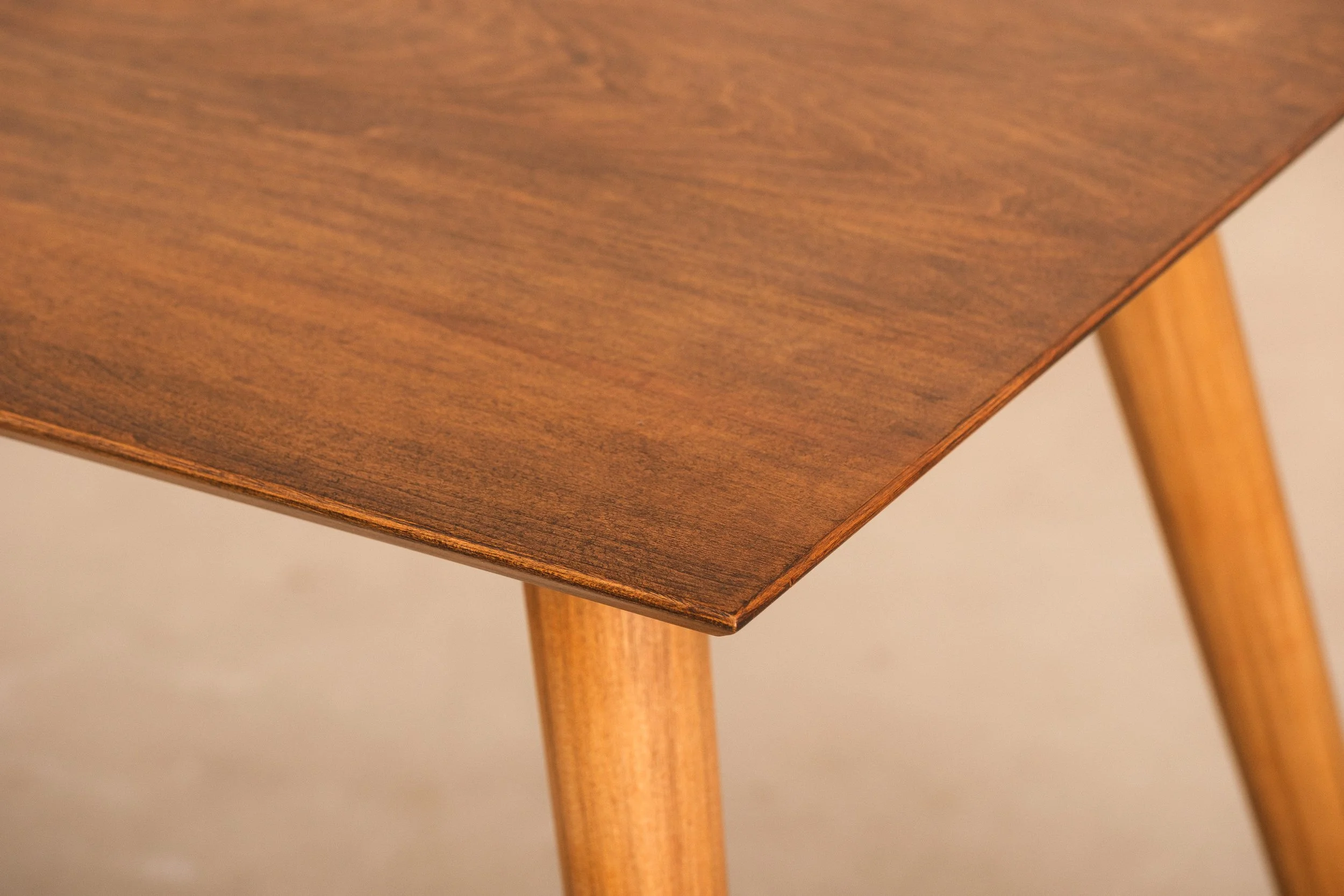
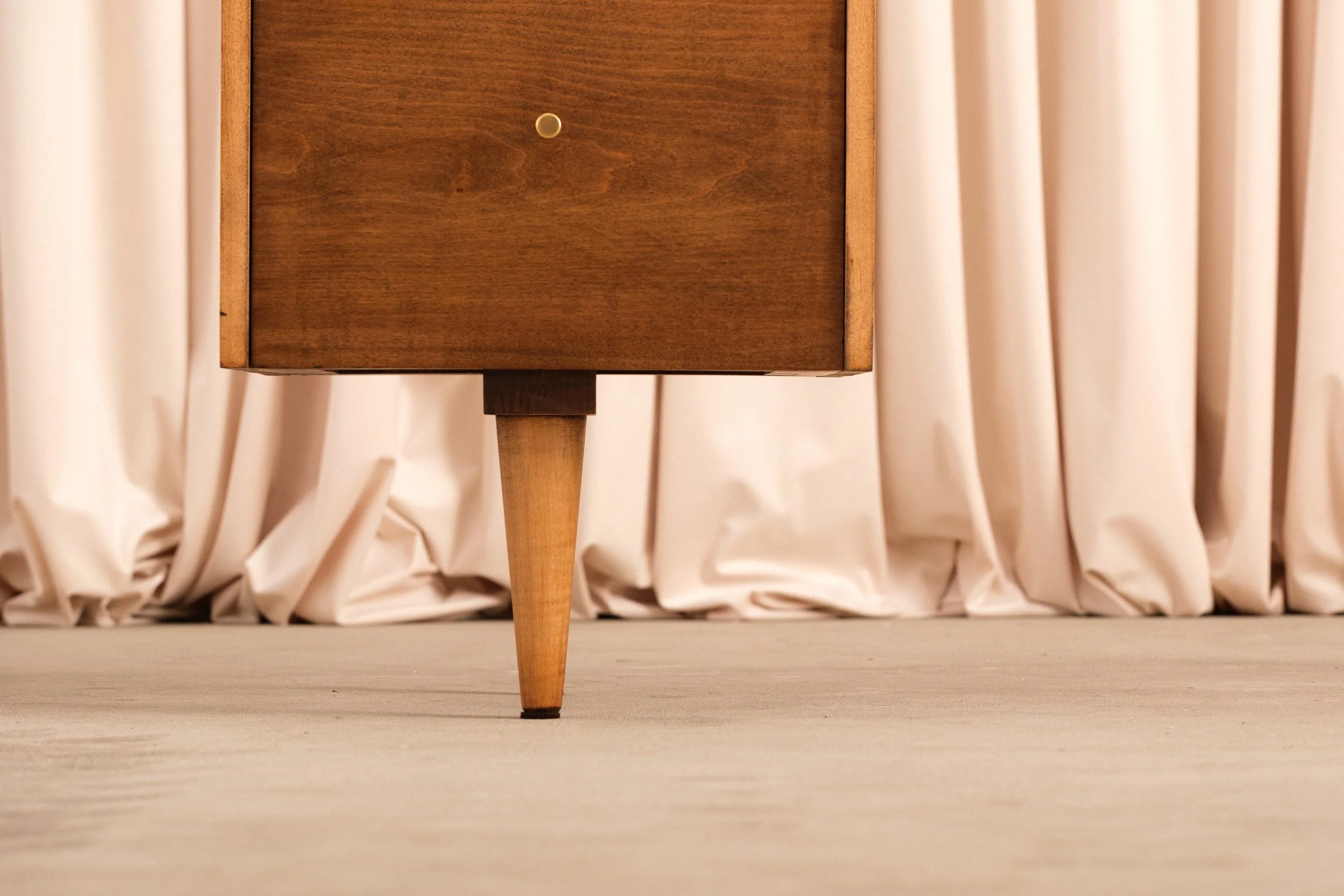
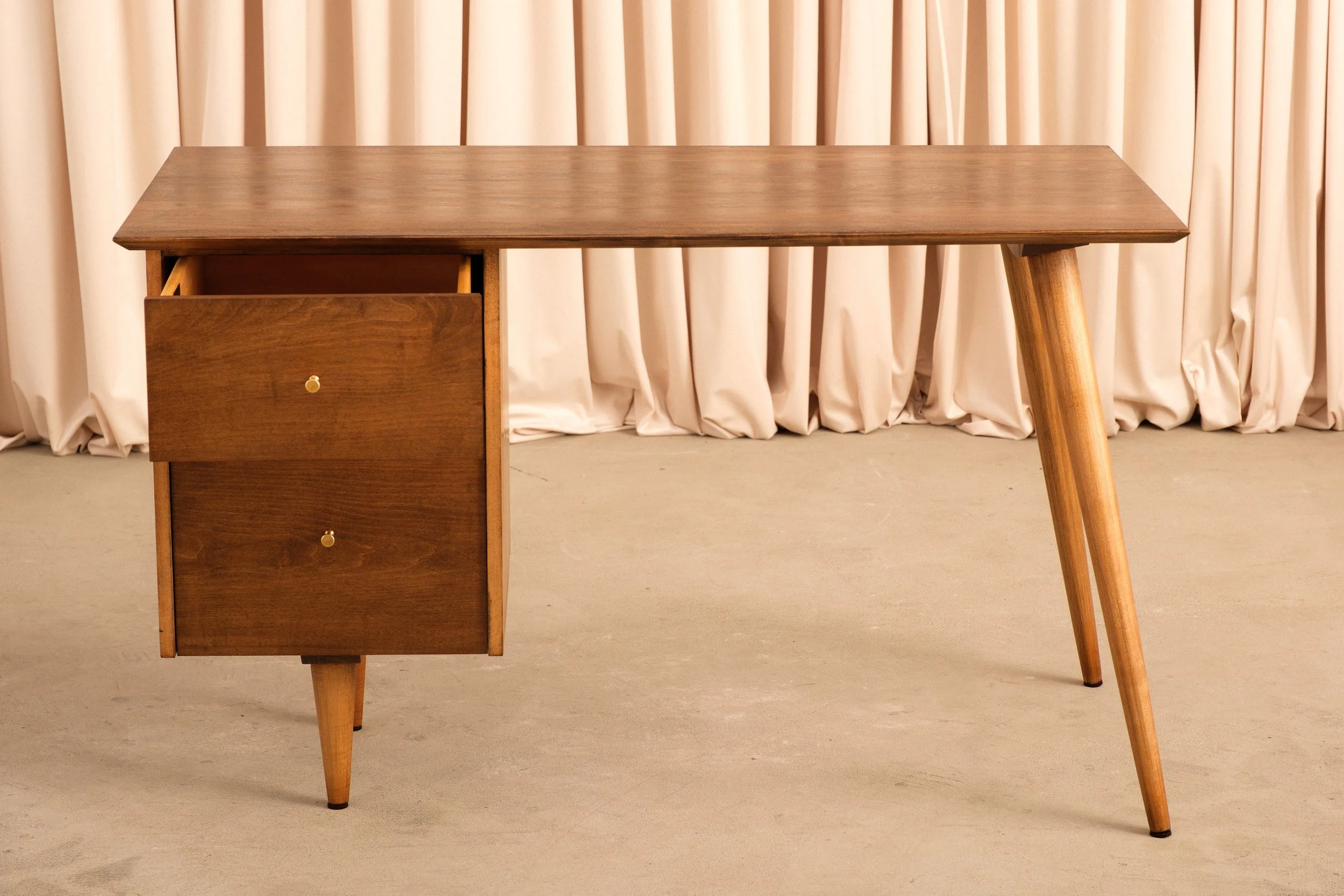
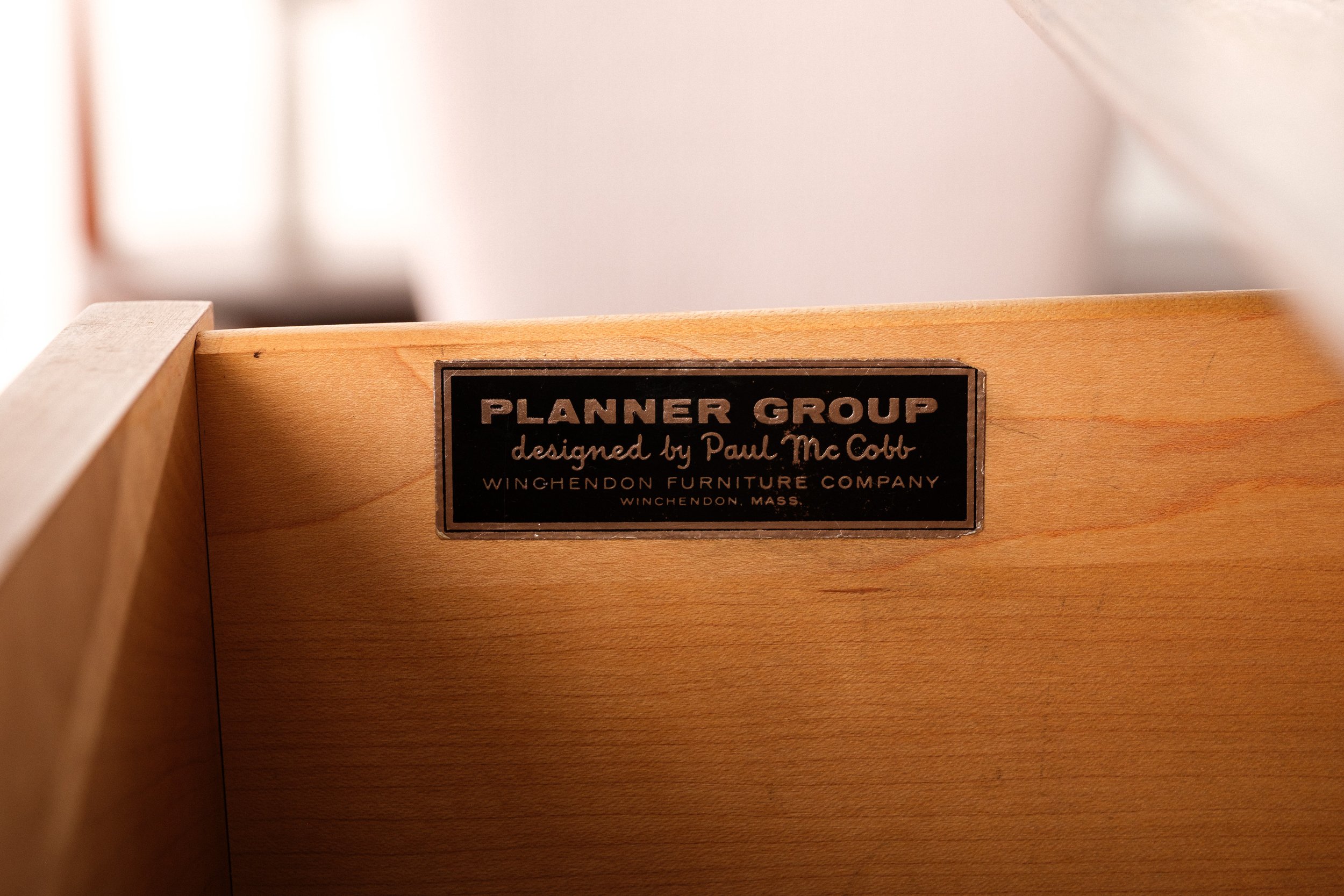
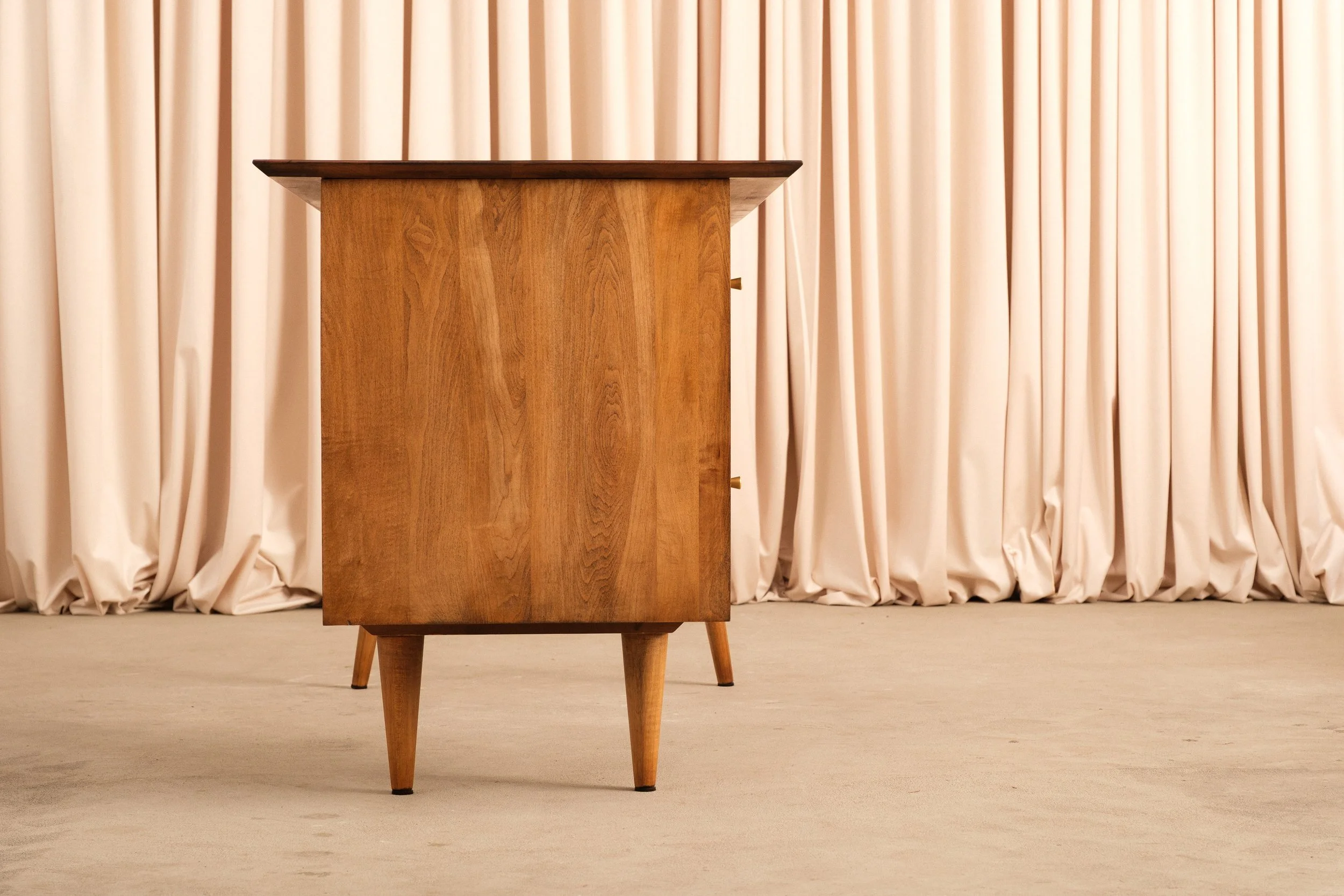
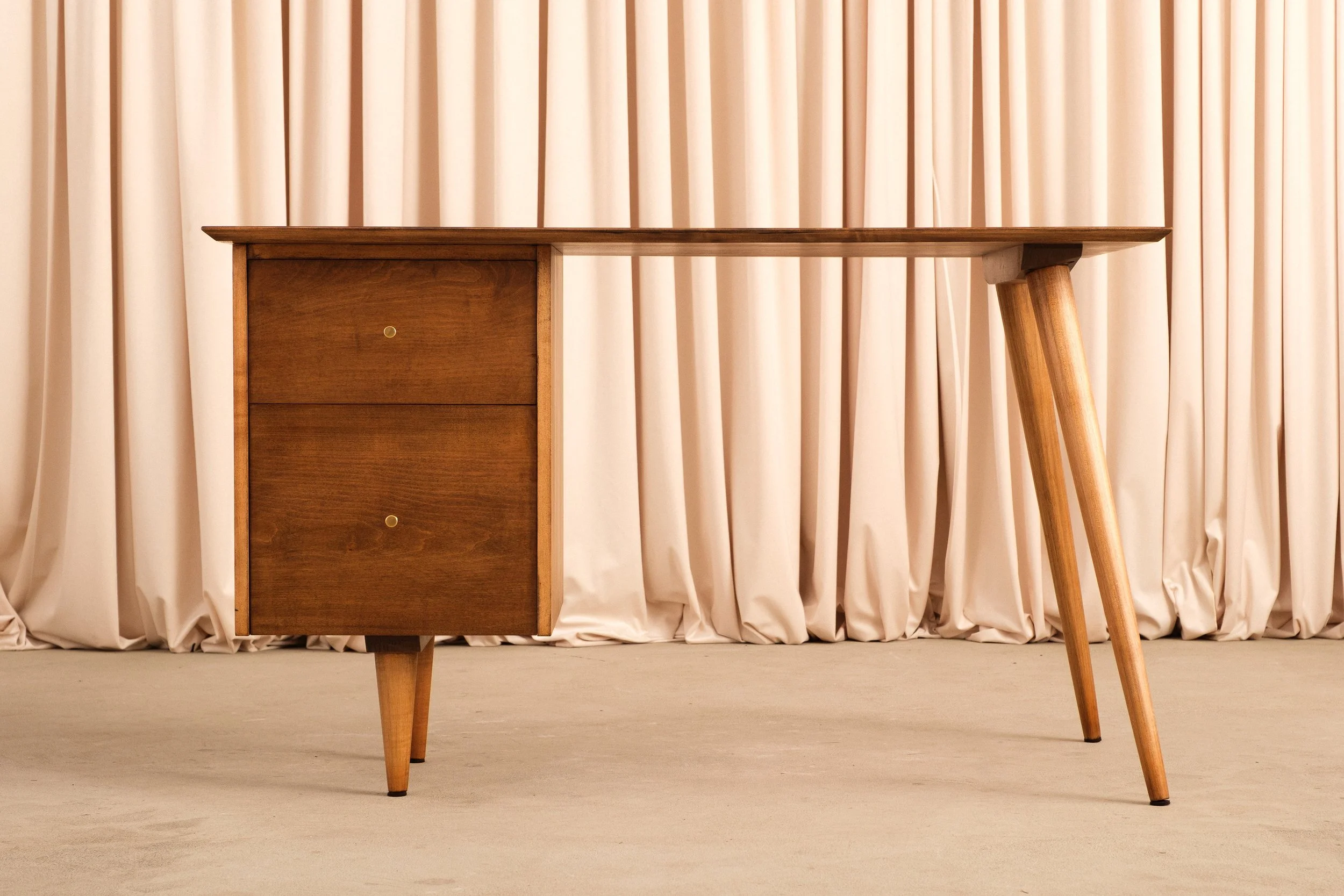
Designed by Paul McCobb as part of the iconic Planner Group collection, this 1960s desk captures everything that made McCobb's work so influential: clean architectural lines, restrained proportions, and an ability to make functional furniture feel remarkably elegant.
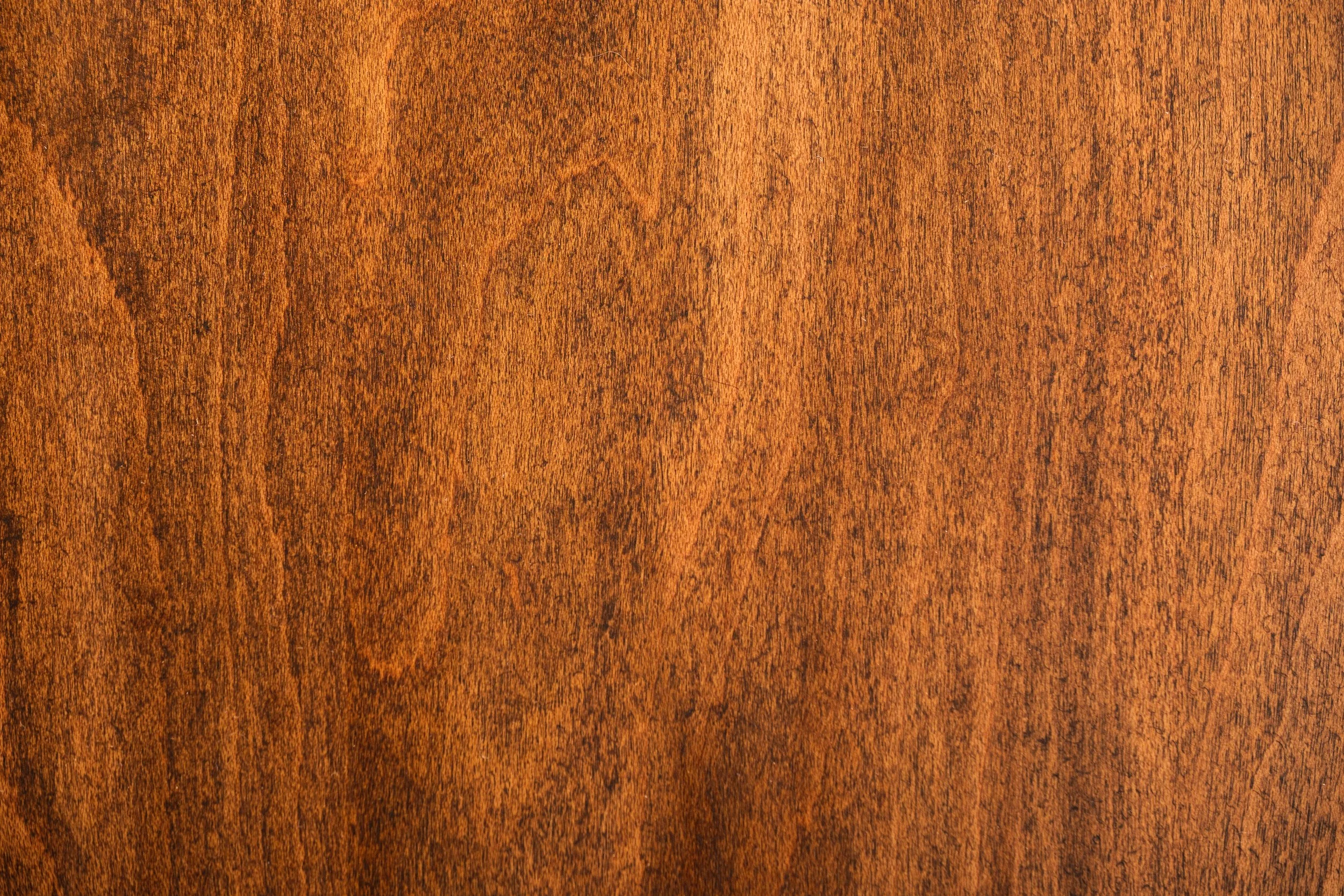
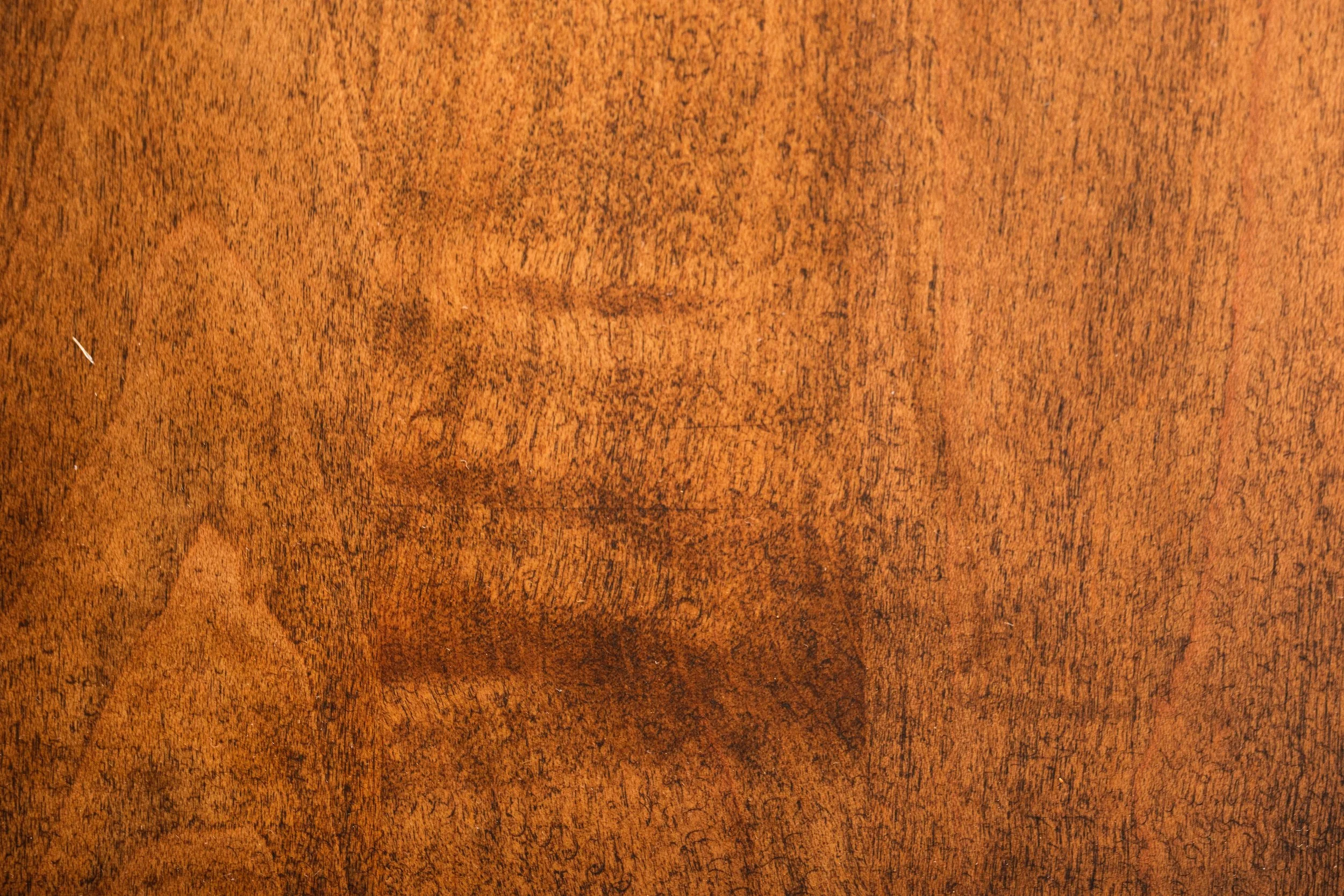
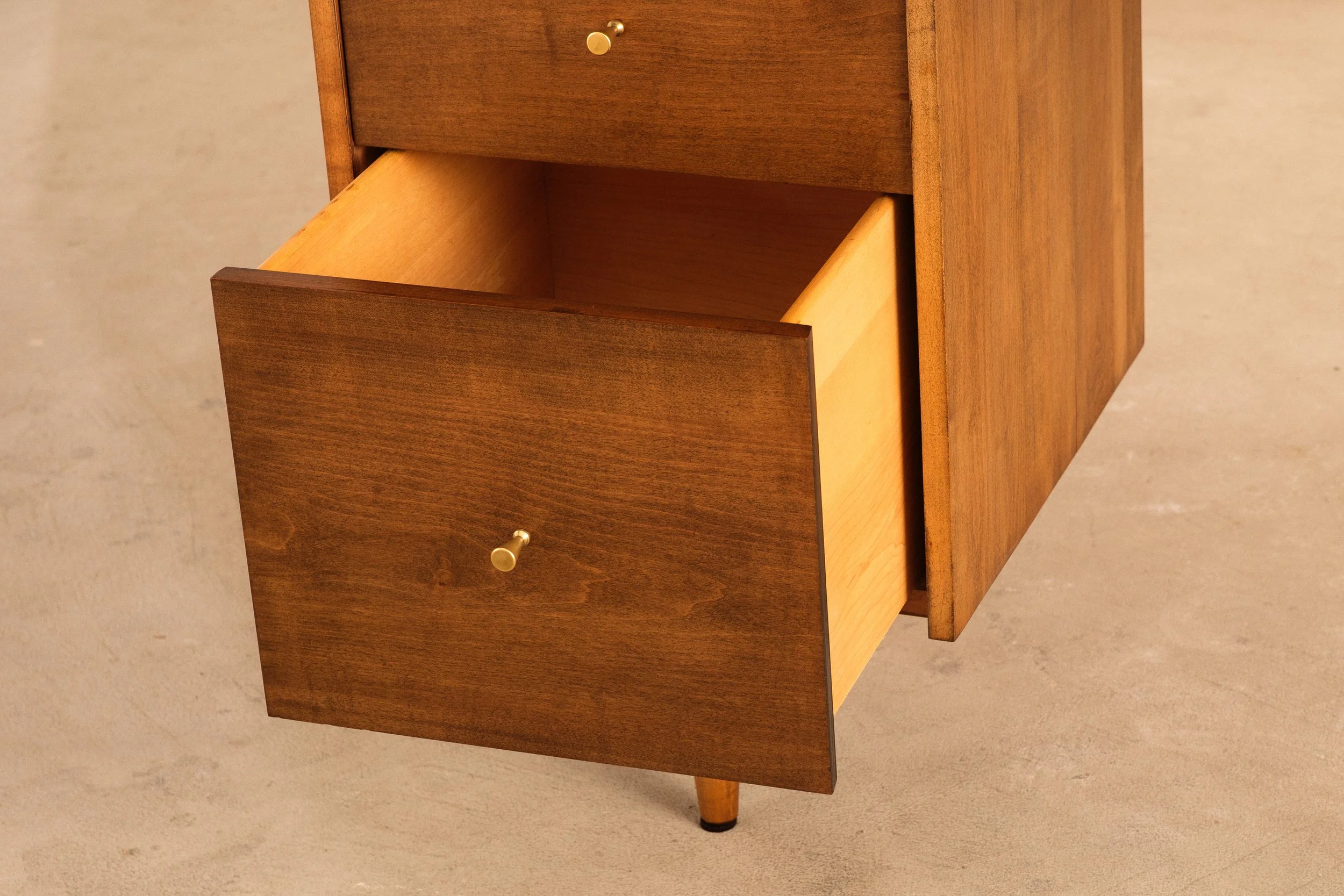
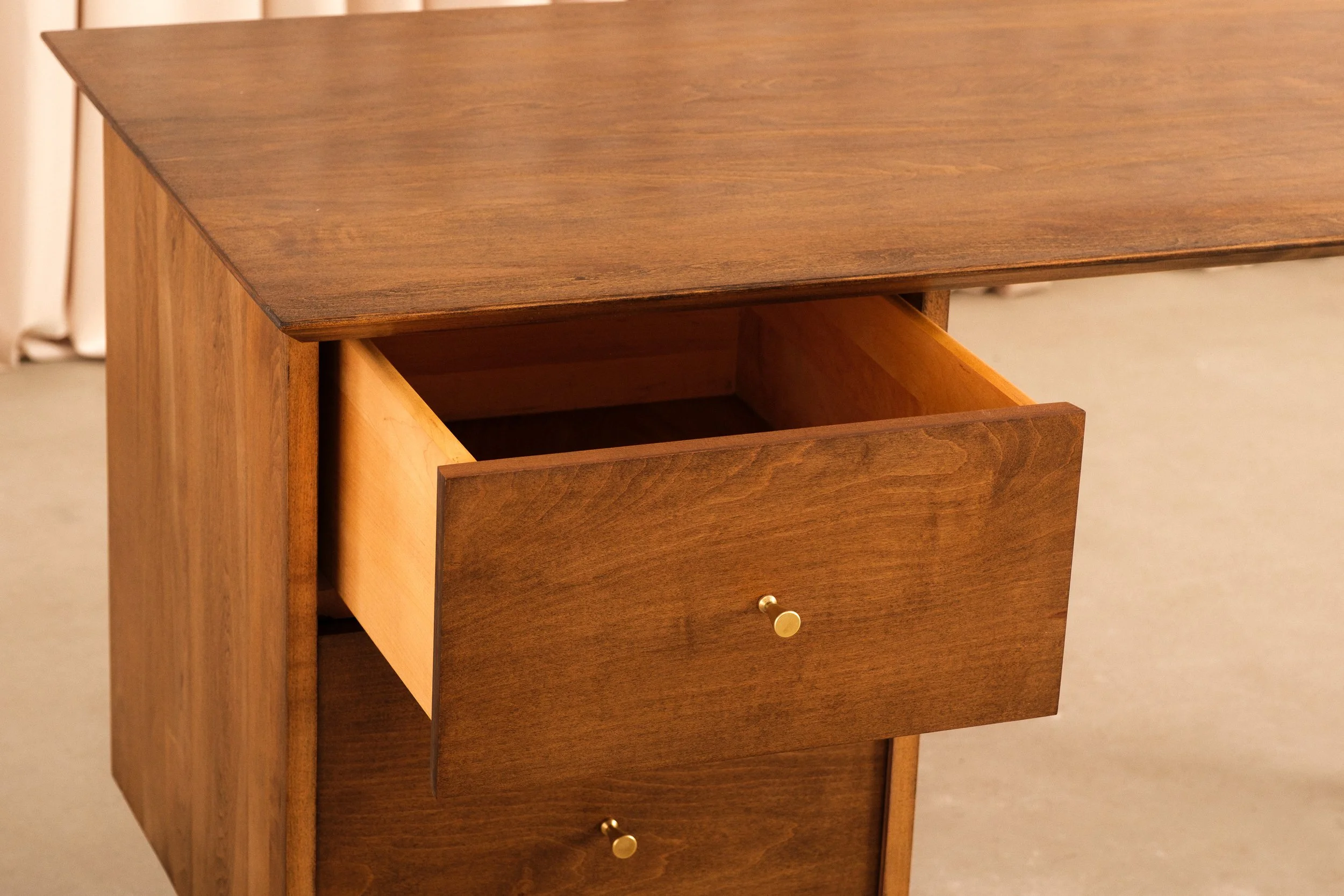
This example has been fully refinished and given a deeper, darker walnut-toned finish that brings out the warmth and character of the wood while giving the desk a more sophisticated presence.
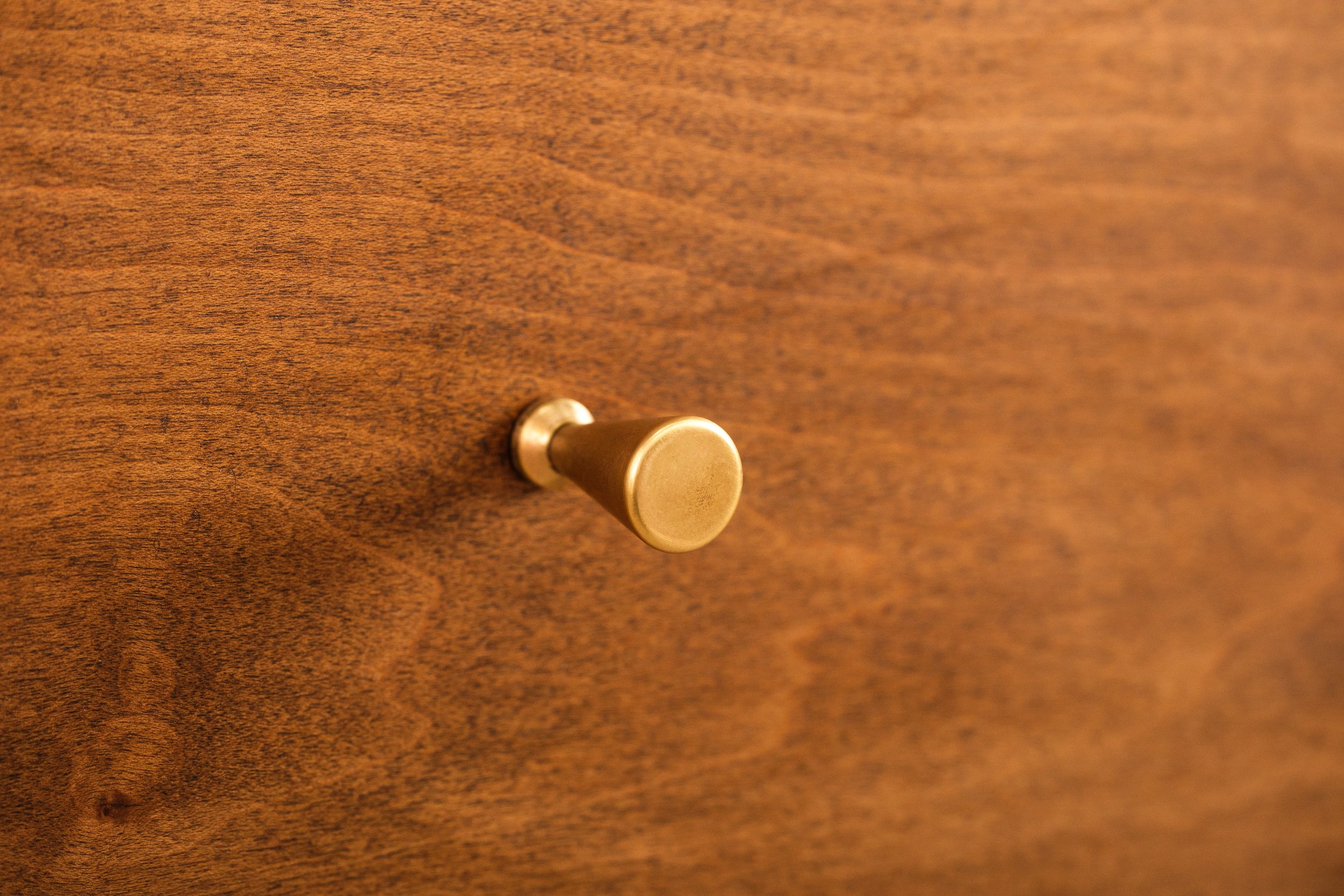
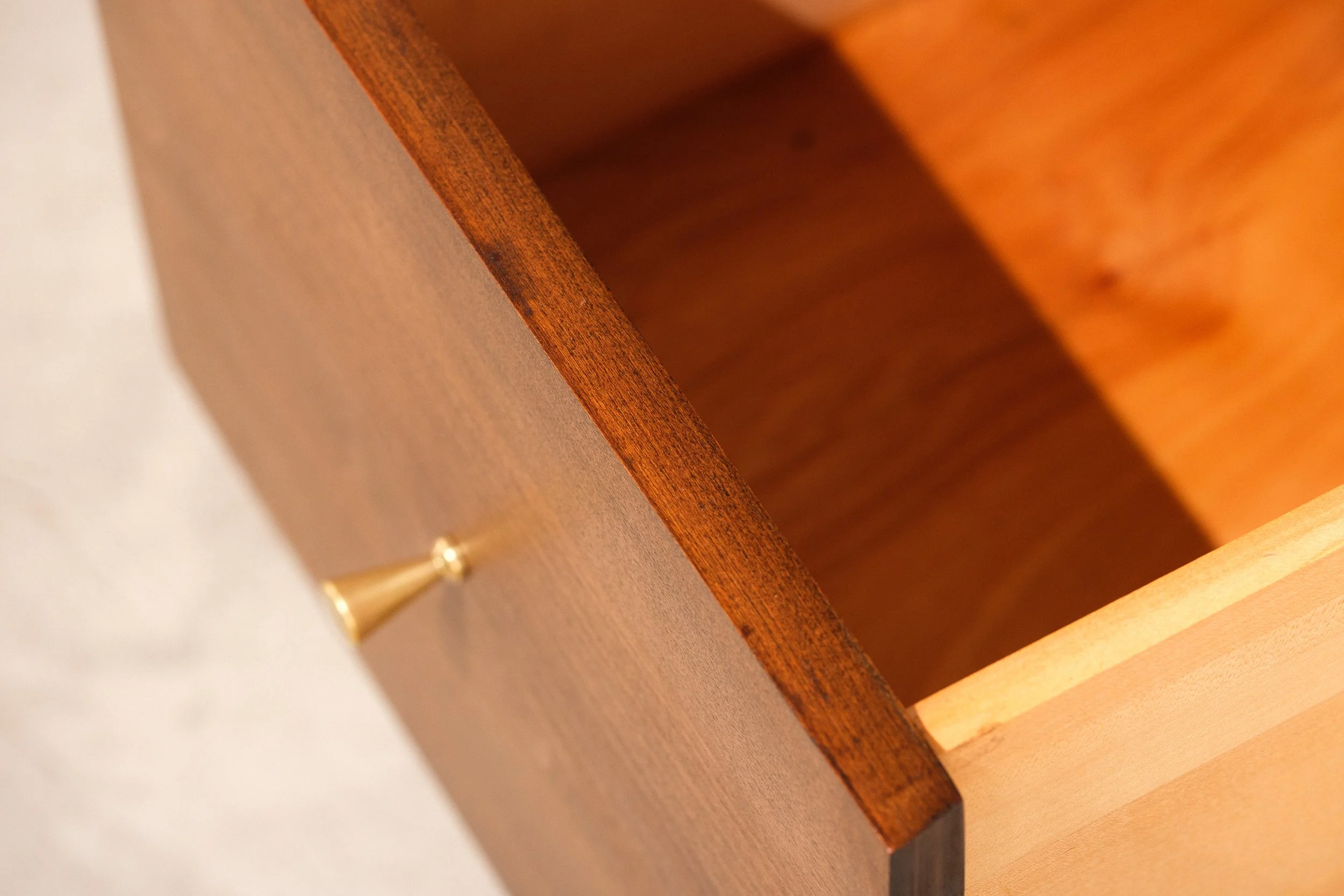
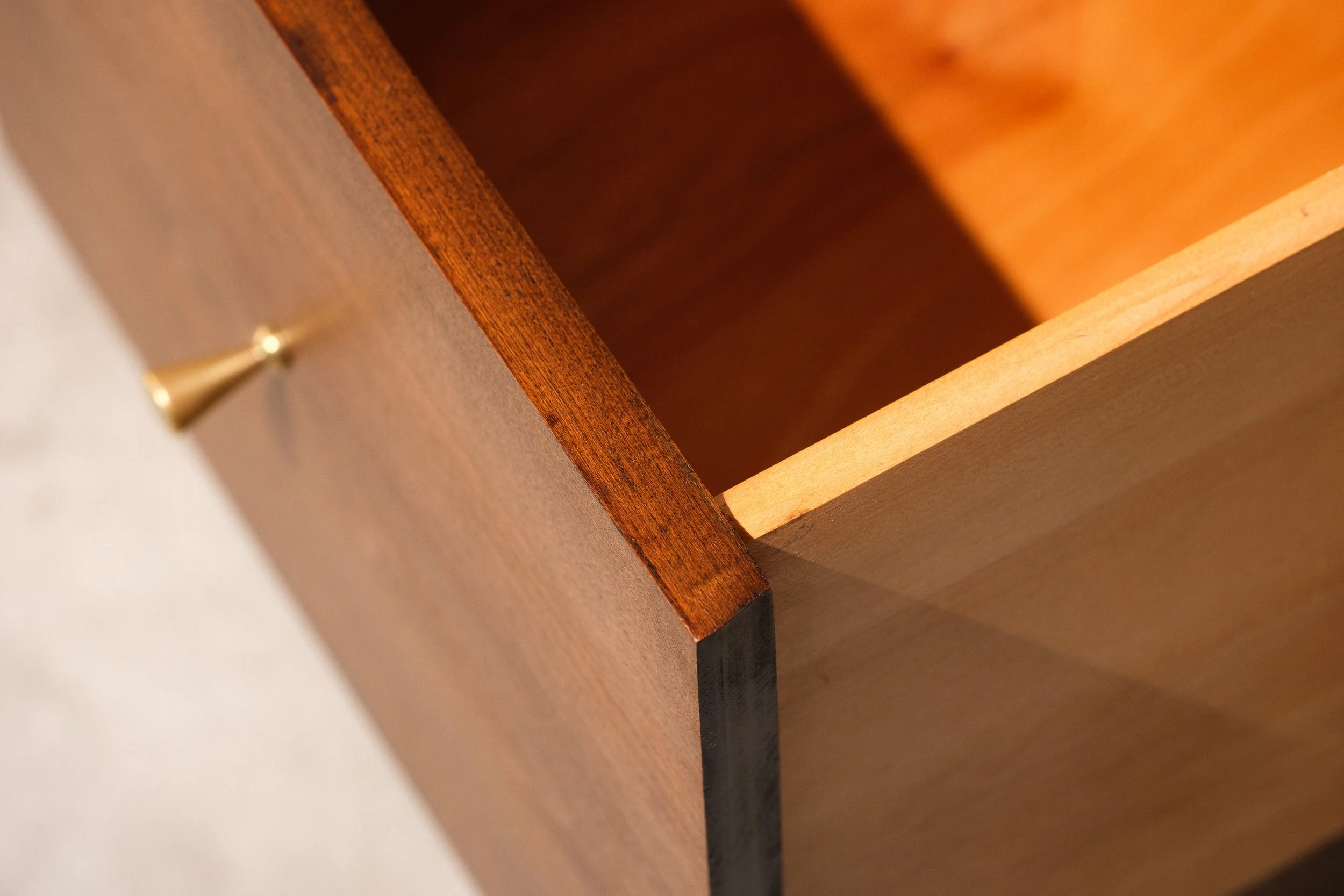
The hardware has also been carefully repolished, restoring the contrast between the rich wood finish and the original metal details.
The desk remains in great vintage condition, with minor signs of age and use consistent with a vintage piece. Rather than eliminating every trace of its history, the restoration preserves the character and materiality that make vintage furniture special.
Elegant enough for a formal home office, but equally at home against a wall in a living room, bedroom, or creative studio.
A beautifully restored example of one of Paul McCobb's most enduring mid-century designs.
Designed by Paul McCobb as part of the iconic Planner Group collection, this 1960s desk captures everything that made McCobb's work so influential: clean architectural lines, restrained proportions, and an ability to make functional furniture feel remarkably elegant.
This example has been fully refinished and given a deeper, darker walnut-toned finish that brings out the warmth and character of the wood while giving the desk a more sophisticated presence.
The hardware has also been carefully repolished, restoring the contrast between the rich wood finish and the original metal details.
The desk remains in great vintage condition, with minor signs of age and use consistent with a vintage piece. Rather than eliminating every trace of its history, the restoration preserves the character and materiality that make vintage furniture special.
Elegant enough for a formal home office, but equally at home against a wall in a living room, bedroom, or creative studio.
-
Dimensions: 48ʺW × 24ʺD × 29ʺH
Origin: USA
Period: 1960s
Materials: Birch wood.
Condition: Excellent, fully refinished.
-
Local Pickup: Local pickup is available by appointment from our warehouse and is free of charge. Pickup must occur within 7 calendar days of purchase unless otherwise agreed to in writing.
Local Delivery: Local delivery is available within the city of Chicago through trusted third-party carriers for aflat rate of $150. Expedited delivery may be available at additional cost.
White Glove Delivery: White Glove delivery is available through trusted third-party carriers and includes in-home placement and removal of packaging debris. Availability and pricing vary by item and location—please contact in advance for a quote.
Shipping: Domestic shipping in the U.S. is available via USPS for eligible smaller items. In-stock pieces typically ship within 5–7 business days.
View all shipping policies here.
-
This piece is being sold as a vintage item. Minor variations, patina, and signs of wear are part of its character and authenticity.
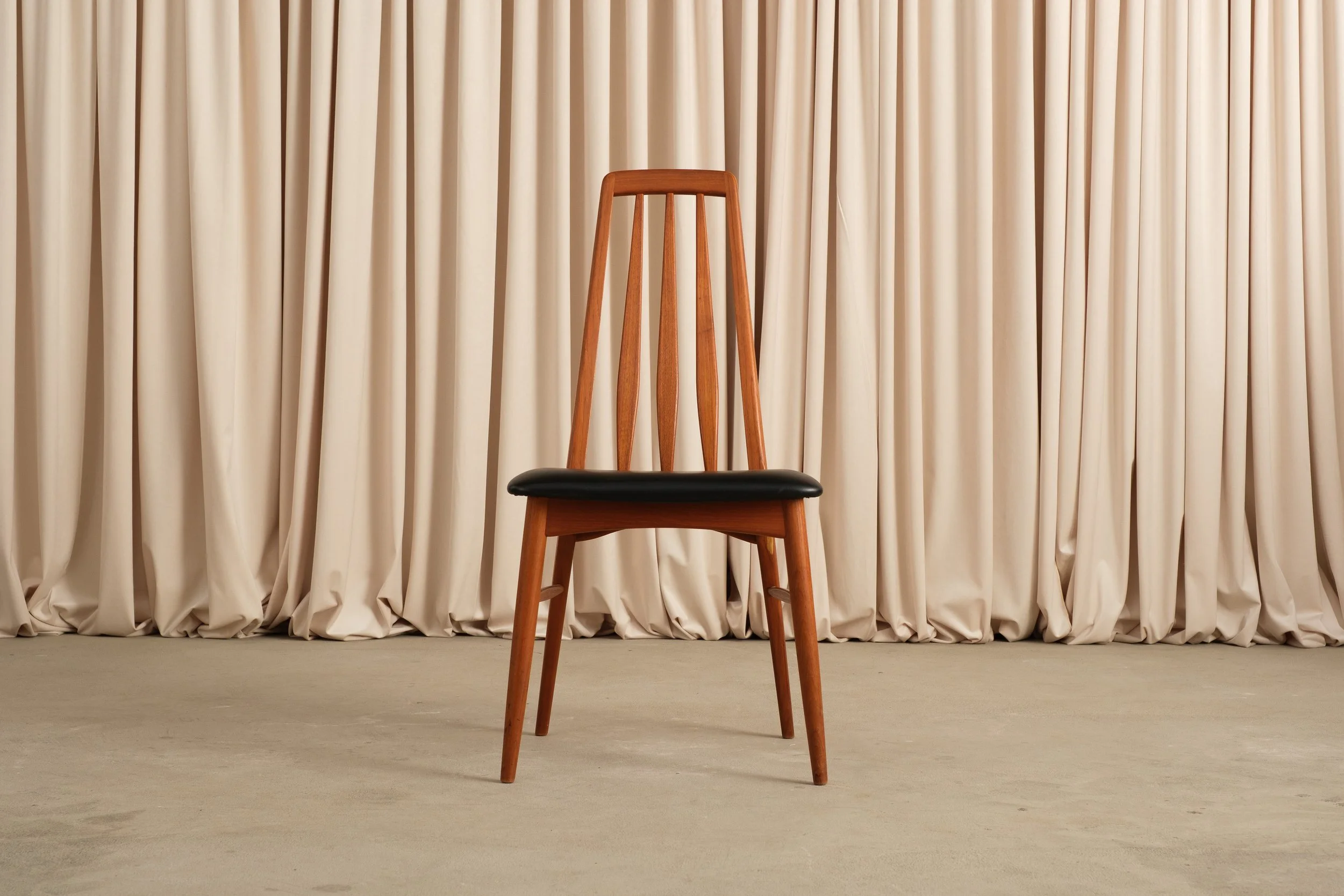
A beautifully example of one of Danish mid-century design's most recognizable dining chairs.
Designed by Niels Koefoed for Koefoeds Hornslet in Denmark, the Eva chair is one of the designer's most iconic designs. Introduced during the height of Danish Modernism, the chair is instantly recognizable for its elegantly sculpted back, graceful proportions, and beautifully shaped wooden frame.
What makes this particular example special is the combination of its sculptural Danish design and its updated, refined finish. The result is a chair that still feels unmistakably mid-century, but works just as beautifully in a more contemporary interior.
The chair remains in great vintage condition, with minor scuffs and signs of wear consistent with its age and previous use. These imperfections have been left as part of the chair's character rather than trying to make a vintage piece look artificially new.
A beautiful standalone dining chair, desk chair, or accent chair — and an especially strong piece for anyone collecting Danish Modern design.
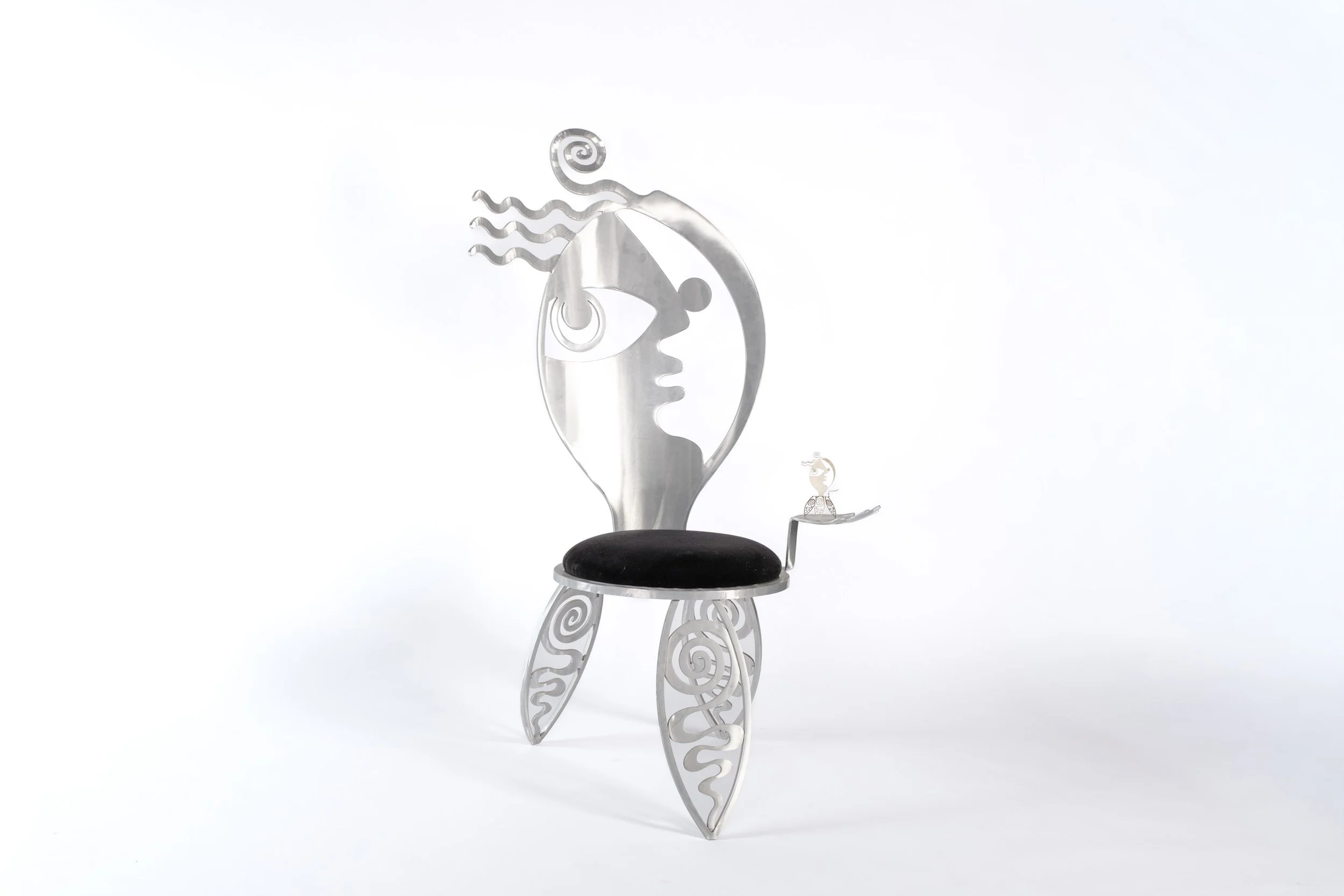
Royal's design language is unmistakable: a cubist face forms the high back, an open hand becomes the armrest, and the whole silhouette reads more as functional sculpture than conventional seating. The piece was originally conceived as a miniature study before Rockledge Design Studio scaled it into this full-sized, sittable version, which is exactly why this listing includes both. You're getting the finished large-scale chair alongside its original miniature counterpart, a rare pairing that shows the design's full creative arc from concept to object.
This example is in perfect condition, no wear, no oxidation, no dings to the aluminum finish that you typically see on pieces this age. Structurally sound and ready to display or use.
Ben Seibel (1918–1985) studied at Columbia and Pratt and built his reputation primarily through his iconic tableware designs for Raymor and Jenfredware. His furniture output was deliberately limited, which is precisely what makes pieces like these so sought after. When Seibel designed a chair, he brought the same exacting attention to proportion and materiality that defined his objects. The result was furniture that rewards looking at from every angle.
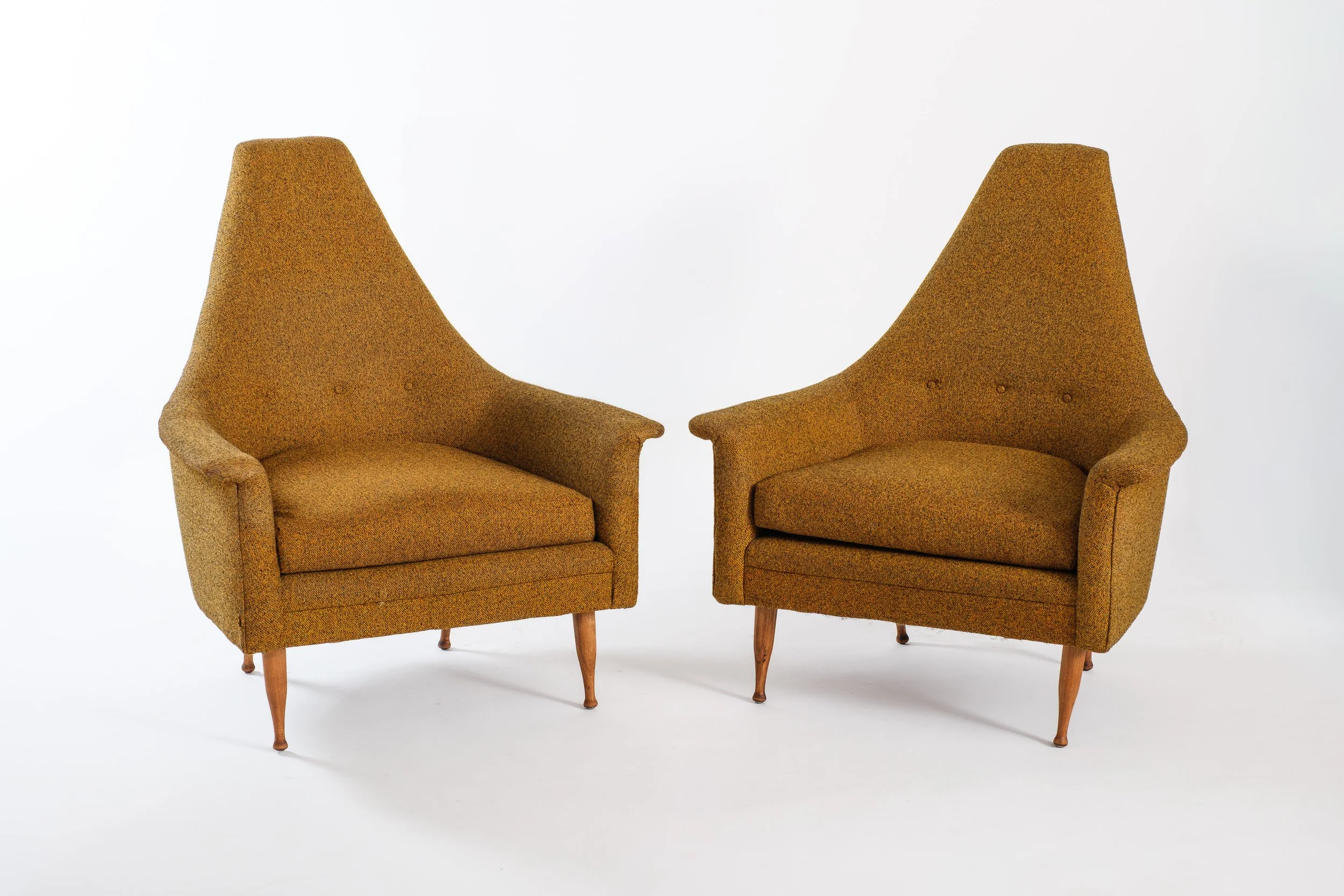
The high-back lounge chair is his masterpiece in seating. The dramatically tall back creates an enveloping, almost throne-like presence. The gently flared arms invite you to settle in. The delicately turned walnut legs with their characteristic bulbous feet are immediately recognizable to anyone who knows Seibel's work, and completely distinctive to anyone who doesn't.
This pair is exceptional for several reasons. The khaki and orange upholstery is a perfect expression of 1970s American design confidence, warm, bold, unapologetic, and very much having its cultural moment right now. The walnut legs have been professionally sanded and refinished to a beautiful condition. There is one small fabric defect visible in the photos, noted honestly, as always.
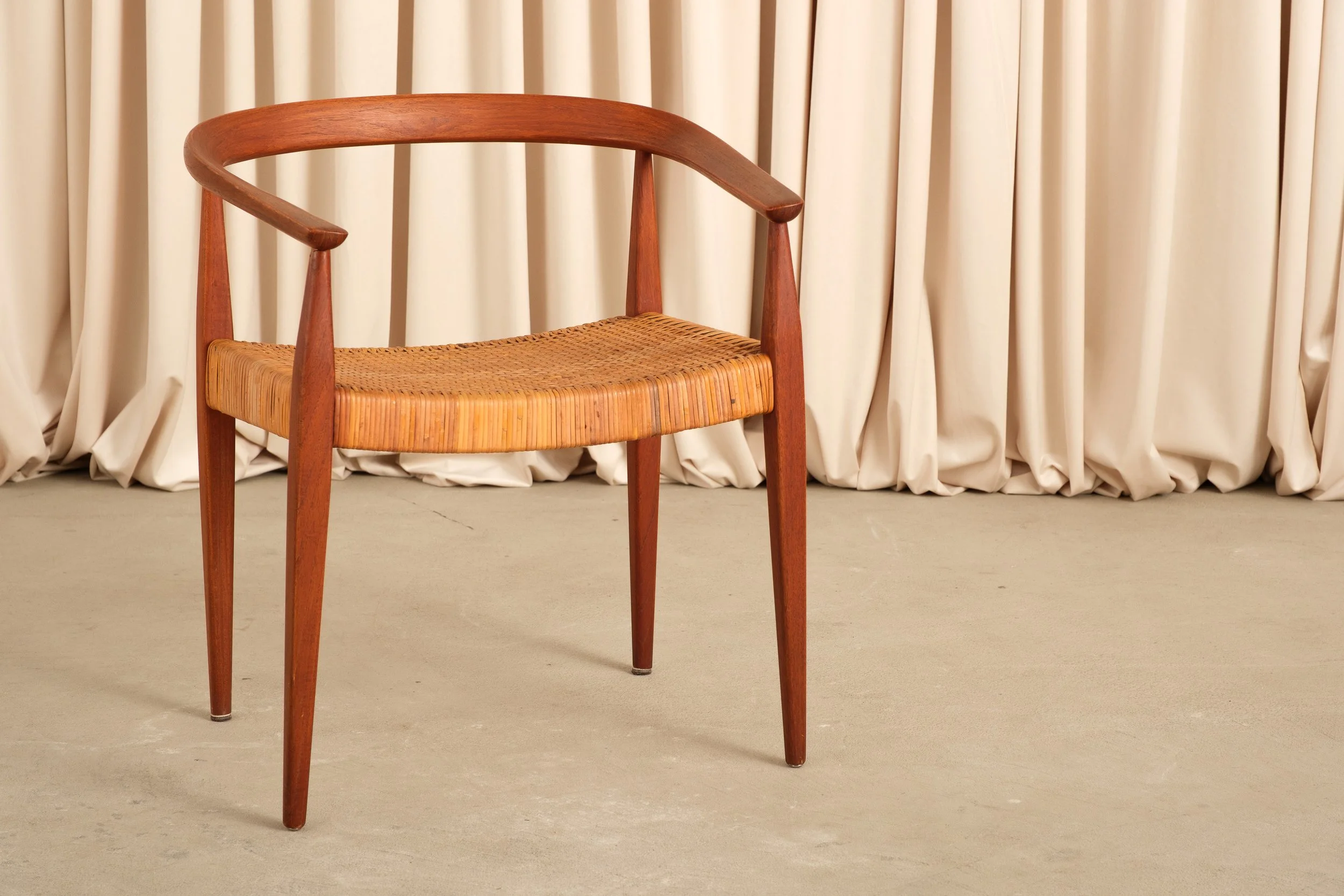
Nanna Ditzel Model 113 armchair for Poul Kolds Savværk, Denmark 1955. Solid oak frame, original handwoven cane seat. One of the rarest mid-century Danish chairs on the market.
Nanna Ditzel was the best designer Denmark produced in the 20th century and somehow still doesn't get enough credit for it. The Model 113 is a perfect example of why, a solid oak frame with a sweeping circular backrest that flows directly into the armrests like it was bent rather than built, sitting on four slender tapered legs that have absolutely no business being that elegant. Original handwoven cane seat, intact and in excellent shape, which at 70 years old is either very good luck or very good care. Probably both. Minor marks consistent with age and a life well-lived, but nothing that takes anything away from one of the rarest chairs to come out of mid-century Scandinavia. The kind of piece serious collectors spend years looking for.
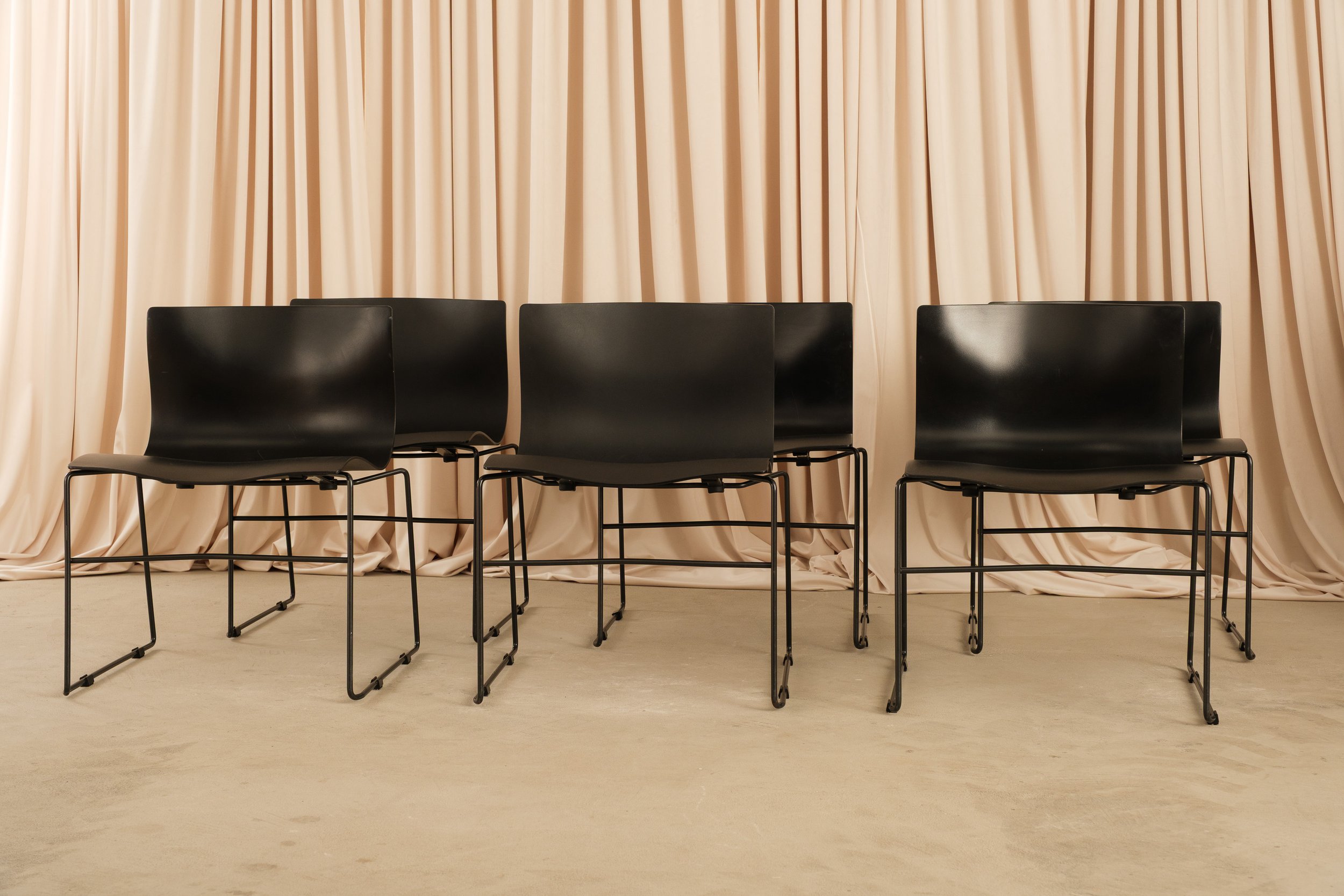
Six Handkerchief stacking chairs by Lella and Massimo Vignelli for Knoll — from one of the most famous designer couples in history. Massimo Vignelli is the man who designed the New York City subway map, the American Airlines identity, and the Bloomingdale's shopping bag. He and his wife Lella ran Vignelli Associates for decades, producing some of the most rigorously elegant design work of the 20th century. When Knoll, America's most prestigious furniture manufacturer, asked them to design a chair, the result was the Handkerchief.
These are in MoMA's permanent collection. That's not a flex, that's just a fact. Designed in 1985, they get their name from the way the molded fiberglass seat appears to float like fabric caught mid-air, draped over a slender powder-coated steel wire base. Stackable, incredibly light, and instantly recognizable to anyone who knows design. This set of six comes in all-black with scuffs and scratches consistent with a life well-lived. Original embossed Knoll label intact on each chair. Sold as a set of 6 .
A beautifully restored example of one of Paul McCobb's most enduring mid-century designs.
Designed by Paul McCobb as part of the iconic Planner Group collection, this 1960s desk captures everything that made McCobb's work so influential: clean architectural lines, restrained proportions, and an ability to make functional furniture feel remarkably elegant.
This example has been fully refinished and given a deeper, darker walnut-toned finish that brings out the warmth and character of the wood while giving the desk a more sophisticated presence.
The hardware has also been carefully repolished, restoring the contrast between the rich wood finish and the original metal details.
The desk remains in great vintage condition, with minor signs of age and use consistent with a vintage piece. Rather than eliminating every trace of its history, the restoration preserves the character and materiality that make vintage furniture special.
Elegant enough for a formal home office, but equally at home against a wall in a living room, bedroom, or creative studio.